
Liquidation Tips · 7 min read
Amazon pallet auctions: bid ceilings, fees, and when fixed price wins
How auction lots really price out once premiums, handling, and post-hammer freight are counted — plus the ceiling worksheet we use before bidding.
Auctions are the most exciting way to buy liquidation merchandise and the easiest way to overpay while feeling like you won. The mechanics are simple enough — lots are listed, buyers bid, the highest bid takes it — but the true cost of an auction pallet is assembled from several numbers that arrive at different times, and only the first of them appears on the bidding screen. This is the discipline we use to keep auction buying rational, and the honest case for when a fixed-price lot is simply the better operation.
🔨 How auction pricing actually assembles
On a fixed-price listing you see the pallet price and get freight quoted before you commit, so the worksheet closes before money moves. In an auction, the hammer price is followed by whatever premium the platform charges, then handling or loading fees, then freight arranged after you have already won and cannot walk away. Each of those is legitimate. The danger is purely psychological: bidders anchor to the hammer number and discover the rest afterwards.
| Cost | Auction | Fixed price at our desk |
|---|---|---|
| Merchandise | Hammer price, unknown until the close | Listed on the page before you decide |
| Buyer’s premium | Percentage added after the win | None |
| Handling or loading | Sometimes charged per lot | Not a hidden line |
| Freight | Usually arranged after you have committed | Quoted to your ZIP before you commit |
| Storage | Charged if collection runs past the deadline | Not applicable when pickup is scheduled |
| Condition risk | Varies by seller and often described briefly | Grade stated on the listing |
The bid ceiling is the whole discipline
Work backwards from what the lot is worth on your floor, subtract every downstream cost, and the remainder is your maximum bid. Write it down before the auction opens and treat it as a wall rather than a suggestion. The bidders who lose money are rarely the ones who paid slightly too much once — they are the ones who never calculated a ceiling and let the last thirty seconds do it for them.
The ceiling worksheet
| Line | How to derive it | Direction |
|---|---|---|
| Realistic channel revenue | Units you expect to list × your normal realised price | Start here |
| Channel fees | Your platform or booth costs | Subtract |
| Sorting and testing labour | Hours × your own rate | Subtract |
| Materials and repackaging | Bags, cartons, labels | Subtract |
| Freight or collection | Quote it before bidding, not after | Subtract |
| Buyer’s premium and fees | Platform percentage and per-lot charges | Subtract |
| Margin you require | The reason you are doing this at all | Subtract |
| Maximum bid | What remains | Do not exceed |
Quote the freight before the auction closes
Get an indicative movement cost to your address while the lot is still open. A pallet you cannot afford to move is a pallet you cannot afford to win, and storage fees begin the moment a collection deadline passes.
Bidding rule
One ceiling, written down, no in-flight revisions. If a competing bidder passes your number, they have bought your risk, not your bargain.
Fixed prices, stated conditions, and freight quoted to your ZIP — a useful benchmark for any ceiling you are about to set.
Compare against listed pallet prices🔍 Reading an auction lot the way you read the floor
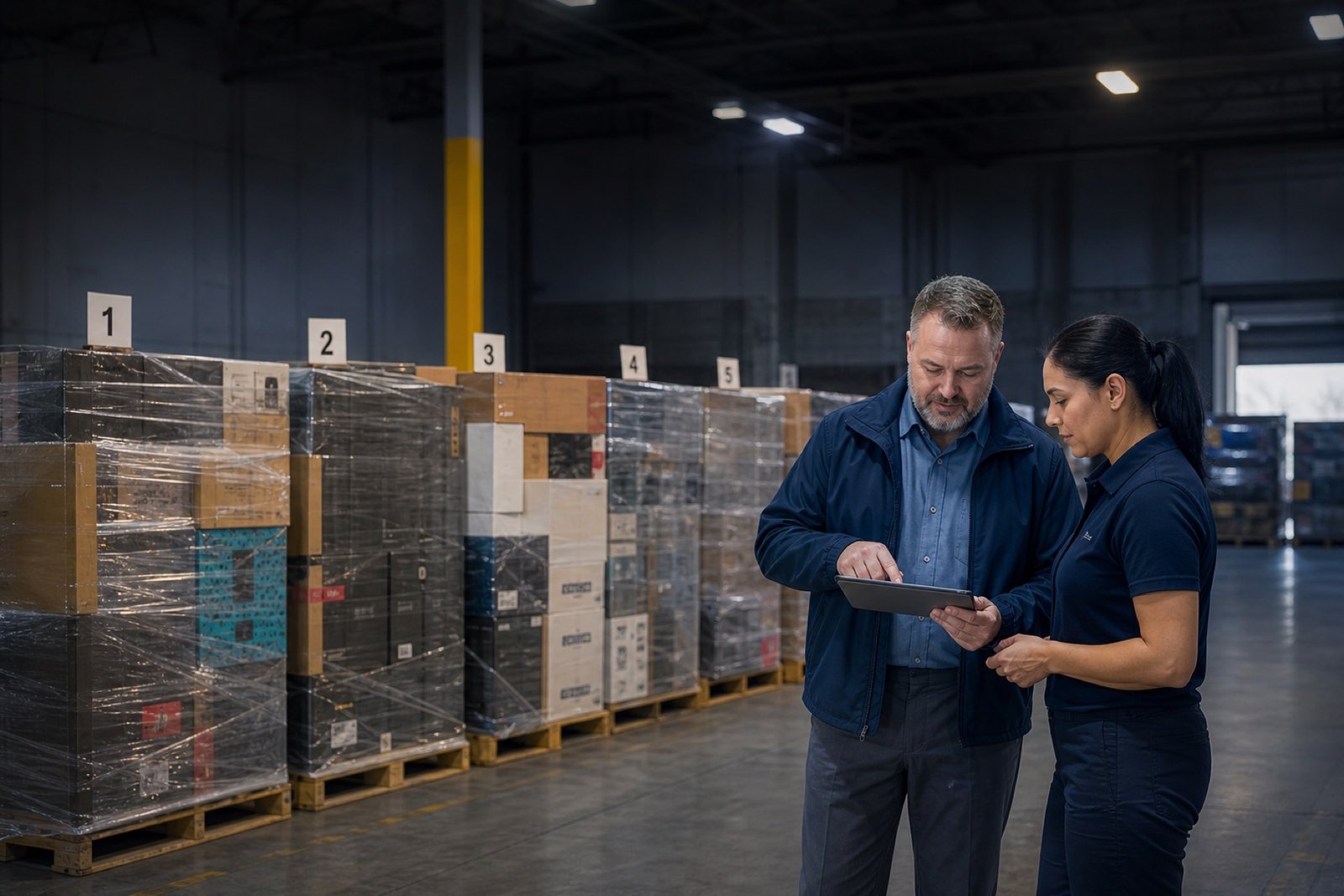
Auction descriptions are typically shorter than product-page descriptions, so the inspection burden shifts to you. Zoom into the photographs and look for the same things you would look for on a dock: whether the merchandise is boxed or loose, whether cartons show retape or crushing, how the stack was built, and whether the lot is one category or a genuine mixture. If the images are generic or the condition line is vague, the correct response is a lower ceiling rather than an optimistic one.
- Prefer lots where the photography shows the actual goods rather than a stock warehouse scene.
- Read collection deadlines and storage terms before bidding, not after winning.
- Check whether the seller loads onto your vehicle, or whether that is your problem on the day.
- Note whether the lot is described as manifested, and price it as unmanifested when it is not.
- Treat estimated retail values on auction pages as signals, never as guarantees.
🚚 Collection operations after a win
Winning is the easy part; collection is where auction buying rewards preparation. Know the site’s hours, whether they load with a forklift, what equipment you must bring, and how long you have before storage charges begin. If you are shipping instead, book the carrier promptly and give an honest description of the destination — a residential address with no forklift needs a liftgate whether the lot came from an auction or a listing page.
⚖️ When a fixed-price pallet is simply the better buy
Auctions suit buyers with time to watch lots, appetite for condition risk, and the equipment to collect quickly. Fixed-price buying suits everyone whose week is already full, because the worksheet closes before the money moves and the movement is planned rather than improvised. Many resellers end up doing both: auctions when a category they know appears at a workable ceiling, and listed pallets when they need predictable inventory to keep a shelf stocked.
🔁 Post-win workflow
- Record the true landed cost — hammer, premium, fees, movement — before the pallet is even unwrapped.
- Photograph the lot on arrival exactly as you would a delivered pallet.
- Sort in one pass into list-now, needs-work, and parts-or-scrap.
- Track sorting hours honestly, because auction lots often carry more unknowns and therefore more labour.
- Compare cost per sellable unit against your last fixed-price lot in the same category.
- Let that comparison, not the excitement of the win, set your next ceiling.
⚠️ Trademark, affiliation, and evidence
Amazon is a trademark of Amazon.com, Inc. Pallets Stock Room is not affiliated with, endorsed by, or sponsored by Amazon, and we do not operate an auction platform on Amazon’s behalf. Lots marketed anywhere as Amazon pallet auctions are customer-return or surplus merchandise that passed through that retail channel before reaching the liquidation market. We describe sourcing only as it was supplied to us, we publish manifests and condition claims only when a supplier provided and verified them for the specific lot, and we make no promise about what any pallet will earn at resale.
Stated condition, listed price, and a movement plan agreed before you pay — no hammer, no premium, no post-win surprises.
Browse customer return pallets instead❓ FAQ
Does Pallets Stock Room run auctions?+
No. Our lots are listed at a fixed pallet price with the condition stated, and freight is quoted separately when you need it. If you also buy at auction, use our listed prices as a benchmark when you set a ceiling.
Are auction pallets cheaper?+
The hammer price often is. The landed cost frequently is not, once a buyer’s premium, handling charges, post-win freight, and any storage fees are added. Compare landed cost to landed cost.
What is a buyer’s premium?+
A percentage the auction platform adds to the winning bid. It is disclosed in the platform’s terms and it belongs in your ceiling calculation before you place a bid, not in your regrets afterwards.
How do I avoid overbidding?+
Write the ceiling down before the lot opens, include every downstream cost in it, and do not revise it while bidding is live. Losing a lot costs nothing; winning the wrong one costs a week.
Can I inspect an auction lot first?+
Some platforms offer preview windows and some do not. Where inspection is unavailable, lower your ceiling to reflect the unknowns rather than assuming the photographs tell the whole story.
What happens if I cannot collect in time?+
Storage charges usually begin after the stated collection deadline, and they accumulate quickly. Confirm the deadline and your transport arrangements before you bid, not after you win.
Ready to buy · transactional
Shop this guide — order pallets now
On-site listings and checkout paths referenced in this article.
Same topic · informational partner guide
Buy amazon pallet liquidation online at PalletsSource
Same topic — online buying journey. Buy wholesale pallets online — listed price, checkout, Customer Care.
Buy amazon pallet liquidation online at PalletsSourceSame topic · informational partner guide
Shop amazon pallet liquidation with confidence at PalletsBay
Same topic — trust-first buying guide. Clear lots. Clear price. Confidence to buy.
Shop amazon pallet liquidation with confidence at PalletsBayBuy on PalletsSource + PalletsBay · commercial + transactional
Order wholesale pallets on partner storefronts
Checkout, bulk quotes, and the same-topic guide on each partner domain.
More from the blog
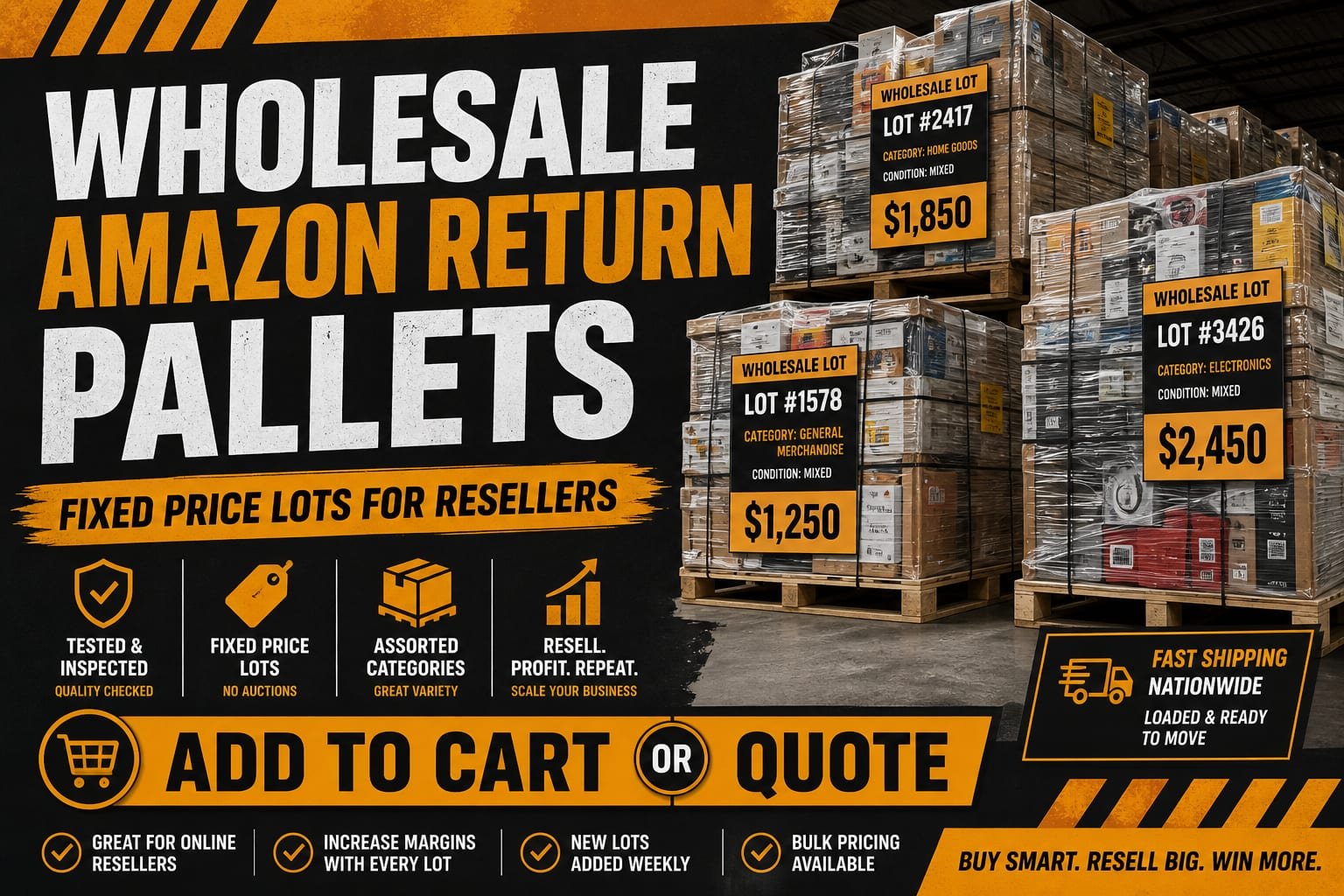
Wholesale Amazon Return Pallets: Commercial Lots for Resellers
Wholesale Amazon return pallets for sale — commercial pricing language, reseller CTAs, and links across the Amazon buy cluster.
11 min read
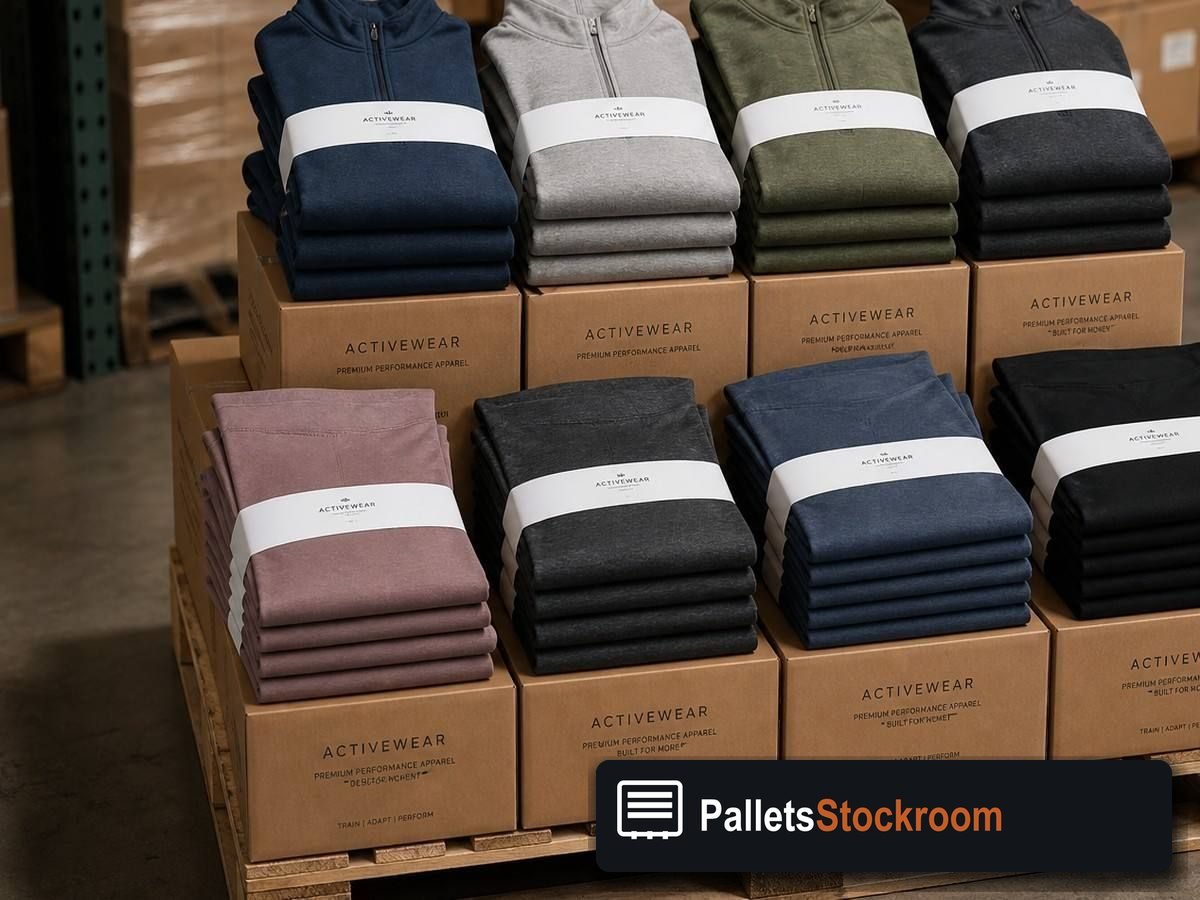
How to Resell Lululemon Pallets: Sorting, Photos, and Margin Math
Practical resale playbook for Lululemon-class pallets — sort by size, photograph for marketplaces, use the lot manifest, and apply −15% when eligible.
12 min read