

Liquidation Tips · 9 min read
Amazon Pallet Liquidation Wholesale 🏗️ Turning Single Buys Into a Supply Programme
Scaling from occasional pallets to a wholesale rhythm changes the constraints: dock time, sort labor, cash cycle, and storage. Here is how to plan a programme that your floor can actually absorb.
🏗️ There is a point where buying pallets stops being a series of decisions and starts being an operation. It usually arrives sooner than people expect — often around the third or fourth simultaneous lot, when the sort lanes stop clearing before the next load lands. Wholesale is not simply the same activity with a bigger number on the invoice. The binding constraint moves from money to throughput: how many pallets your floor can receive, break, triage, list, and clear in a week. This guide is about planning against that constraint, because volume bought beyond it does not become profit, it becomes a wall of wrapped stock.
📦 Categories · 🔢 pallet count · 📍 delivery postcode or collection · 📅 the cadence you want.
Request a wholesale quote📊 Work out your throughput before your budget
Throughput is the number of pallets you can take from wrapped to worked in a given week, and it is a function of three things: staffed hours, bench and lane space, and outbound capacity. Most buyers can state their budget instantly and have never calculated their throughput at all. Do it properly once. Time yourself on a full lot from cutting the wrap to having the sellable share photographed and listed, then divide your available weekly hours by that figure. That number, not your bank balance, is the size of programme you can run.
⏱️ Different grades consume different amounts of it
A cleaner overstock or open box lot might be worked in a fraction of the time a heavy returns lot demands, because there is less to test, less to clean, and less to decide. That means your throughput is not a fixed pallet count — it is a mix. A programme of four lots a week might be comfortable if two are overstock and two are returns, and completely unmanageable if all four are returns. When you plan cadence, plan the mix at the same time.
🏢 Space is a queue, not a container
Newcomers to volume think about storage as a place to put things. Operations people think about it as a queue with an inbound rate and an outbound rate. If loads arrive faster than the sellable share leaves, the queue grows regardless of how large the building is, and every extra unit in it costs you access, visibility, and double handling. Keep a named area for inbound, a named area for sort lanes, and a named area for listed stock awaiting dispatch. When any one of those three overflows into another, your intake is too fast and the fix is buying less, not shelving more.
💷 The cash cycle is the other queue
Wholesale buying puts money out in lumps and takes it back in a trickle of individual sales. The gap between those two rhythms is your working capital requirement, and it grows with volume even when every lot is profitable. Track how long it takes a typical lot to return its landed cost in your channel, and never let committed purchases exceed what you can carry across that period. A programme that is profitable on paper and short of cash in practice is the most common way a growing reseller stalls.
| Constraint | How to measure it | What breaks when ignored |
|---|---|---|
| ⏱️ Sort labor | Timed hours per lot, by grade | Lots stack up half-worked and nothing gets listed |
| 🏢 Lane space | Named inbound, sort, and outbound areas | Double handling and lost stock |
| 🚚 Dock access | Deliveries you can physically receive per week | Missed slots, waiting-time charges, refused loads |
| 💷 Cash cycle | Days from landed cost to cost recovered | Profitable on paper, short of cash in practice |
| 📸 Listing capacity | Units you can photograph and list per week | Sellable stock sits invisible and ages |
| 🗑️ Disposal route | Volume of lane four you can clear per week | Unsaleable goods occupy the space you paid for |
📅 Building a cadence instead of buying in bursts
Buying in bursts feels efficient and behaves badly. A cadence — a predictable number of pallets, at a predictable interval, in a predictable mix — smooths the labor demand, makes your space planning meaningful, and lets a supplier hold appropriate stock for you rather than guessing. It also means a bad load is a small proportion of a steady flow instead of a large proportion of one enormous purchase. Tell us the rhythm you want and we will tell you honestly whether it matches what comes through the door in those categories.
- Pick two or three core categories you already clear reliably. Resist collecting aisles.
- Set a weekly or fortnightly pallet count that sits comfortably below your measured throughput.
- Fix the grade mix so labor demand stays predictable rather than spiking.
- Agree how the loads move — scheduled collection, or delivery to a slot you can staff.
- Review every fourth cycle against lane shares, hours, and cash recovered.
- Adjust one variable at a time. Changing category, volume, and grade together teaches you nothing.
🚛 Mixed loads and when a truckload makes sense
Multiple pallets can often travel together, which is where the freight arithmetic starts to improve — the per-pallet movement cost of six pallets on one vehicle is usually better than six separate movements. A full truckload is a different commitment again and only makes sense when you can receive it in one go, break it inside a reasonable window, and carry the cash across the cycle. If any of those three is doubtful, staged multi-pallet loads on a cadence will serve you better than one large arrival that overwhelms the floor.
🤝 What we need from a wholesale buyer
- 📦 The categories that actually sell for you, in priority order.
- 🔢 A pallet count per cycle and the cycle length you want to hold.
- 📍 Delivery postcode with access details, or confirmation you are collecting.
- 🏗️ Whether you have a dock, a forklift, a pallet truck, or none of those.
- ✅ The grades you can handle and the ones you would rather not receive.
- 📅 Any timing constraints — days you cannot receive, seasons you scale up or down.
⚖️ Trademarks, non-affiliation, and evidence
Amazon and all other retailer and brand names mentioned on this page are trademarks of their respective owners, used only to describe merchandise that may be present in wholesale lots. Pallets Stock Room is not affiliated with, endorsed by, sponsored by, or an authorised liquidation partner of Amazon or any other retailer. Availability in any category depends on what physically arrives, so we will not commit to a supply volume we cannot evidence. Sourcing is described as our supplier described it. No figure on this page is a promise of margin, sell-through, or profit.
Tell us your throughput, not just your budget. It produces a far more useful answer.
Start a wholesale conversationScale the operation first, then scale the buying to match it
Every wholesale programme that works was built in that order. The ones that fail were built in the other order, and the wrapped stock in the corner is the receipt.
❓ FAQ
What counts as wholesale rather than a single purchase?+
In practice, anything beyond a few listed pallets, or any repeating arrangement. Single available lots can be bought straight from the shop. Multi-pallet and recurring supply go through the bulk quote form so availability and movement can be confirmed first.
Can I get the same categories every cycle?+
We will hold to a cadence where the stock allows it, but availability depends on what physically arrives. We would rather tell you a category is thin this cycle than send something that does not match what you asked for.
Is it cheaper per pallet to buy several at once?+
The goods are priced per pallet. Where the saving usually appears is movement — several pallets on one vehicle is generally better per pallet than several separate deliveries. Ask for a quote with your actual pallet count and destination.
Should I take a truckload?+
Only if you can receive it in one movement, break it down within a sensible window, and carry the cash until it clears. If any of those is uncertain, staged multi-pallet loads on a regular cadence are the safer structure.
How do I know how many pallets I can handle?+
Time one complete lot from cutting the wrap to having the sellable share listed. Divide your available weekly hours by that figure. That number is your throughput, and your buying should sit comfortably below it.
Can I mix categories on one delivery?+
Often yes, subject to what is available and how the load builds. Put the categories and quantities on the bulk enquiry and we will confirm what can travel together.
What if a cycle's load does not work for me?+
Tell us specifically what missed — grade, category, or condition — and we will factor it into the next cycle. Liquidation is sold as described, so this is about tuning future supply rather than reversing a completed sale.
Categories, count, cadence, and access. We answer with what the floor can actually support.
Send a multi-pallet enquiryReady to buy · transactional
Shop this guide — order pallets now
On-site listings and checkout paths referenced in this article.
Same topic · informational partner guide
Buy amazon wholesale liquidation online at PalletsSource
Same topic — online buying journey. Buy wholesale pallets online — listed price, checkout, Customer Care.
Buy amazon wholesale liquidation online at PalletsSourceSame topic · informational partner guide
Shop amazon wholesale liquidation with confidence at PalletsBay
Same topic — trust-first buying guide. Clear lots. Clear price. Confidence to buy.
Shop amazon wholesale liquidation with confidence at PalletsBayBuy on PalletsSource + PalletsBay · commercial + transactional
Order wholesale pallets on partner storefronts
Checkout, bulk quotes, and the same-topic guide on each partner domain.
More from the blog
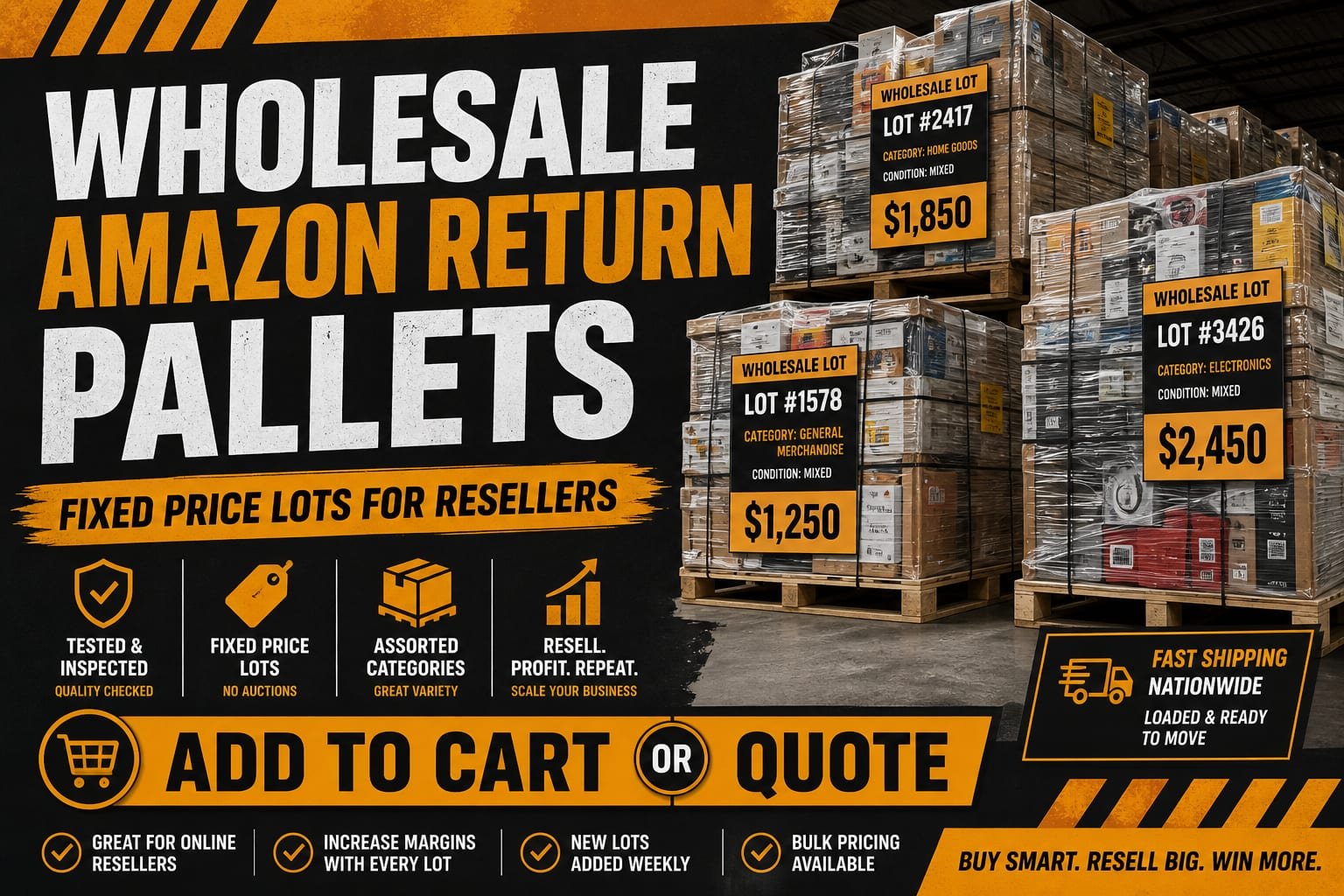
Wholesale Amazon Return Pallets: Commercial Lots for Resellers
Wholesale Amazon return pallets for sale — commercial pricing language, reseller CTAs, and links across the Amazon buy cluster.
11 min read
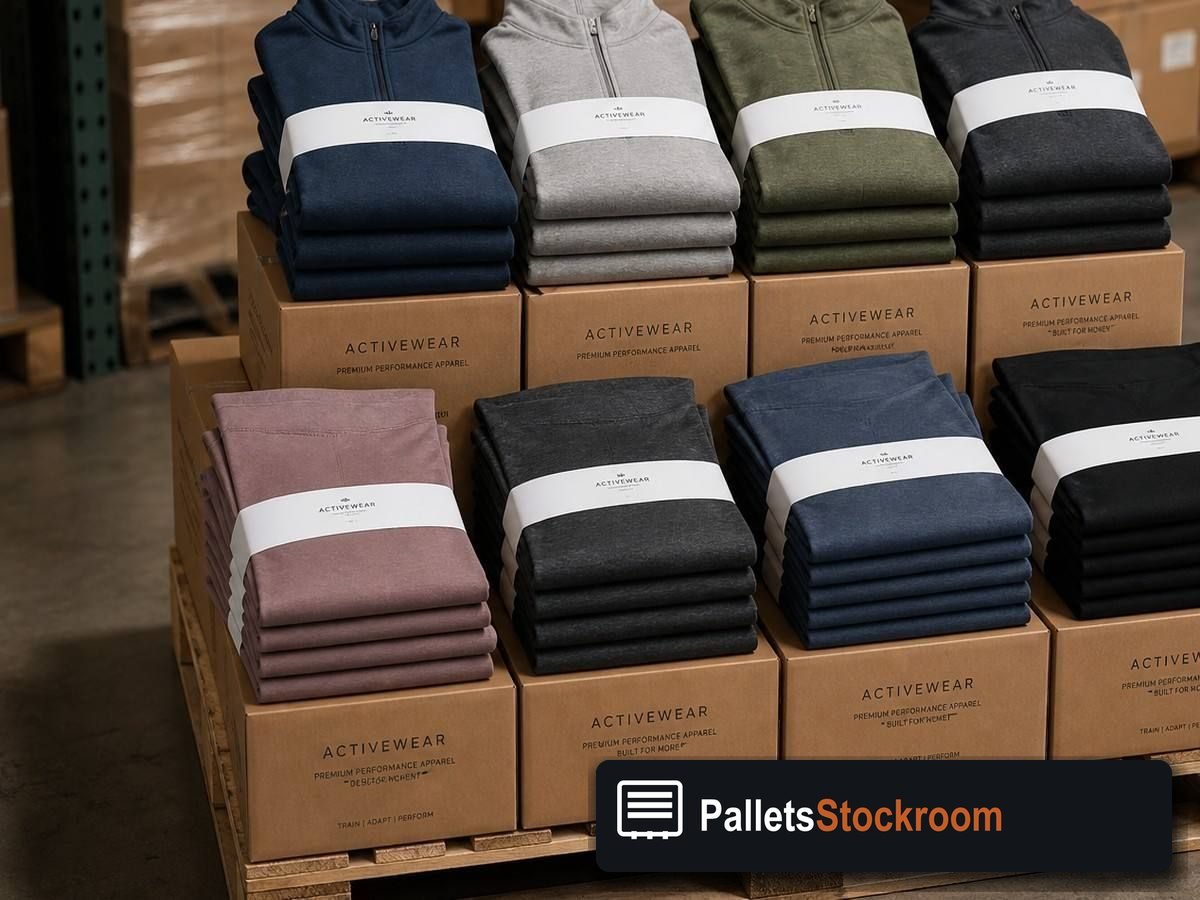
How to Resell Lululemon Pallets: Sorting, Photos, and Margin Math
Practical resale playbook for Lululemon-class pallets — sort by size, photograph for marketplaces, use the lot manifest, and apply −15% when eligible.
12 min read