

Liquidation Tips · 10 min read
Amazon Return Pallets For Sale ↩️ A Triage Bench Guide to Working the Grade
Returns lots are won or lost at the sort bench. Disposition buckets, a per-category testing order, what to clean and re-box, and how to clear the share that will never sell.
↩️ Returns are the grade that rewards process and punishes enthusiasm. Everything that came back through a retailer's door is in there: things that did not fit, things that arrived twice, things opened and rejected, things genuinely broken, and a reasonable amount that is perfectly fine and was simply unwanted. None of that is a defect in the product you bought — it is the definition of the product you bought. What separates buyers who make returns work from buyers who swear off them is entirely what happens at the sort bench in the hours after the wrap comes off.
↩️ Grade stated up front · 📸 goods photographed on the wood · 💵 listed pallet price.
See returns and mixed lots available now🪑 Set the bench up before you cut anything
The single biggest cause of a slow returns lot is sorting into a space that was not prepared. You need a working surface at waist height, four clearly separated destinations on the floor, a bin for packaging, and somewhere for the empty cartons that is not the middle of the aisle. Have tape, a blade, cleaning cloths, and a power point within reach. If any of that is missing you will get up to fetch it, and every interruption in a sort is a carton that goes back down without a decision.
🔀 The four disposition buckets
- ✅ Sellable as-is — complete, presentable, and photographable today with no work.
- 🛠️ Needs work — a clean, a re-box, a missing accessory, a charge, or a simple repair.
- 📦 Bundle or parts — not worth an individual listing, worth something as a multi-item lot.
- 🗑️ Unsaleable — damaged beyond economic repair, unsafe, incomplete beyond use, or simply worthless.
Four buckets, no fifth. The 'decide later' pile is where returns lots go to die, because a decision deferred is a carton handled twice and an evening spent moving the same items around. If you genuinely cannot decide, the item goes in bundle. It is better to under-price something into a job lot than to let it colonise your bench for a fortnight.
🔬 A testing order that matches the category
Different goods hide their faults in different places, so the test differs. Work fast and consistently rather than exhaustively — the aim is a confident disposition, not a laboratory certificate. Anything that cannot be assessed quickly should go to bundle rather than absorb twenty minutes of a sort you have to finish tonight.
| Category | Common failure | Bench check |
|---|---|---|
| 👟 Footwear | Wear, mismatched pairs, missing insoles | Both shoes, both same size, check soles and heel counters |
| 👕 Apparel | Marks, missing tags, wrong size in bag | Open the bag, check size against label, look under the arms |
| 🔌 Electronics | Missing cables, no power, locked devices | Power on, check ports, confirm accessories present |
| 🔧 Tools | Missing batteries, chargers, or bits | Case contents against the moulding, run under power if possible |
| 🍳 Home & kitchen | Breakage, missing lids or parts | Shake test, look for glass, count components |
| 🧸 Toys | Opened boxes, missing pieces | Check seals, weigh against a sealed example where you can |
| 💄 Beauty & personal care | Opened, used, expired, or leaking | Seal intact, check dates, isolate anything that has leaked |
🧼 What is worth fixing and what is not
The rule at our bench is simple: if the work takes longer than the item is worth, it is not work, it is a hobby. A clean and a re-box that takes three minutes to turn an unsellable item into a listable one is excellent value. Sourcing a replacement accessory that takes an hour of searching for a low-value item is not, however satisfying it feels. Batch the quick fixes — do all the cleaning together, all the re-boxing together — because switching between task types is where the time actually goes.
If you would not pay yourself to do it, do not do it
🗑️ Lane four is a cost centre, so plan it
Every returns lot produces a share that will never sell, and pretending otherwise does not reduce it. Plan the exit before you buy: know your local disposal route, know what can be recycled, know what charitable partners will accept, and know what cannot be passed on at all for safety reasons. Damaged goods with electrical or chemical hazards need proper handling rather than a quiet trip to a skip. Budget both the cost and the trips, because unsaleable stock left in place occupies the space you are paying for and slows every subsequent lot.
📊 Record the shares or the next lot teaches you nothing
Write down the four bucket shares as percentages at the end of every lot, together with your hours. Two or three lots in, you will have a personal baseline for what a returns pallet in your categories actually yields, and that baseline is worth more than any general advice on the internet, including this page. It tells you what to bid, which categories deserve your bench time, and when a lot has genuinely underperformed rather than merely disappointed you.
- Log the four bucket shares as percentages of the whole lot.
- Log total hours, split between receiving, sorting, fixing, and listing.
- Log landed cost, including delivery or the real cost of collecting.
- Log revenue at thirty and sixty days rather than at the exciting first week.
- Compare against your previous lot in the same category, not against someone else's video.
- Change one variable on the next buy and repeat.
🤔 What is normal in a returns lot and what is not
Normal: opened packaging, missing manuals, cosmetic marks, a proportion that does not work, mixed sizes and colours, and items you personally would not have chosen. That is the grade behaving exactly as described. Not normal: a lot that is fundamentally a different category from the description, or a grade that bears no relationship to what arrived. That distinction is the whole basis of a fair conversation about a lot, and it is why reading the grade before buying matters so much more than reading the price.
⚖️ Trademarks, non-affiliation, and evidence
Amazon and every other retailer and brand referenced here are trademarks of their respective owners, mentioned solely to describe merchandise that may appear in returns lots. Pallets Stock Room is not affiliated with, endorsed by, sponsored by, or an authorised returns partner of Amazon or any other retailer. We describe a lot as returns only where the supplier described it that way to us, we supply manifests only as received, and we do not estimate contents we have not seen. Bucket shares vary by lot and by category, and nothing on this page predicts what any particular pallet will yield.
Five grades, plainly described. Ten minutes here saves an evening of surprise at the bench.
Read the grading guide before you buy returns🎯 Who returns lots suit, and who they do not
Returns suit people with time, a bench, patience, and a channel that can absorb variety — market traders, online sellers with a broad shop, and anyone who enjoys the sorting rather than merely tolerating it. They do not suit people who need predictable, uniform stock, who have no space to work, or who need money back quickly. There is nothing wrong with deciding returns are not for you and buying cleaner grades instead. That is a sound commercial judgement, not a failure of nerve.
❓ FAQ
What will actually be inside a returns pallet?+
A mixture of sealed, opened, incomplete, and used items across the stated category. That mixture is the grade rather than a fault. Read the condition field before buying, because it sets what is normal to find.
How long does a returns pallet take to sort?+
It varies by category and by how prepared your bench is, which is why we recommend timing your first one. Electronics take longer than apparel because testing takes longer than looking. Record your own hours and use them for the next bid.
What proportion will be unsaleable?+
It varies by lot and category, and we will not quote a figure we cannot evidence for a specific pallet. Track your own share across a few lots — that personal baseline is the only number worth planning against.
Should I repair damaged items?+
Only when the work takes less time than the item is worth to you. Batch quick cleans and re-boxes together. Long repairs on low-value goods consume the hours that should be going into listing sellable stock.
Is a returns lot with broken items a problem with the pallet?+
No. A proportion of non-working and incomplete goods is inherent to the returns grade. A genuine mismatch is receiving a different category or a grade unrelated to what arrived, and that is worth raising with photographs.
What do I do with the unsaleable share?+
Plan the route before you buy: recycling, charitable donation where partners accept it, or proper disposal for anything hazardous. Leaving it in place costs you the space you are paying for and slows the next lot.
Can I buy a single returns pallet to try?+
Yes. Single available lots can be bought as listed. Start with one in a category you already sell, work it end to end, and record your bucket shares before you consider volume.
Tell us the category and how much bench time you have. We will be straight about what suits.
Ask about returns lots on the floorReady to buy · transactional
Shop this guide — order pallets now
On-site listings and checkout paths referenced in this article.
Same topic · informational partner guide
Buy amazon return pallets for sale online at PalletsSource
Same topic — online buying journey. Buy wholesale pallets online — listed price, checkout, Customer Care.
Buy amazon return pallets for sale online at PalletsSourceSame topic · informational partner guide
Shop amazon return pallets for sale with confidence at PalletsBay
Same topic — trust-first buying guide. Clear lots. Clear price. Confidence to buy.
Shop amazon return pallets for sale with confidence at PalletsBayBuy on PalletsSource + PalletsBay · commercial + transactional
Order wholesale pallets on partner storefronts
Checkout, bulk quotes, and the same-topic guide on each partner domain.
More from the blog
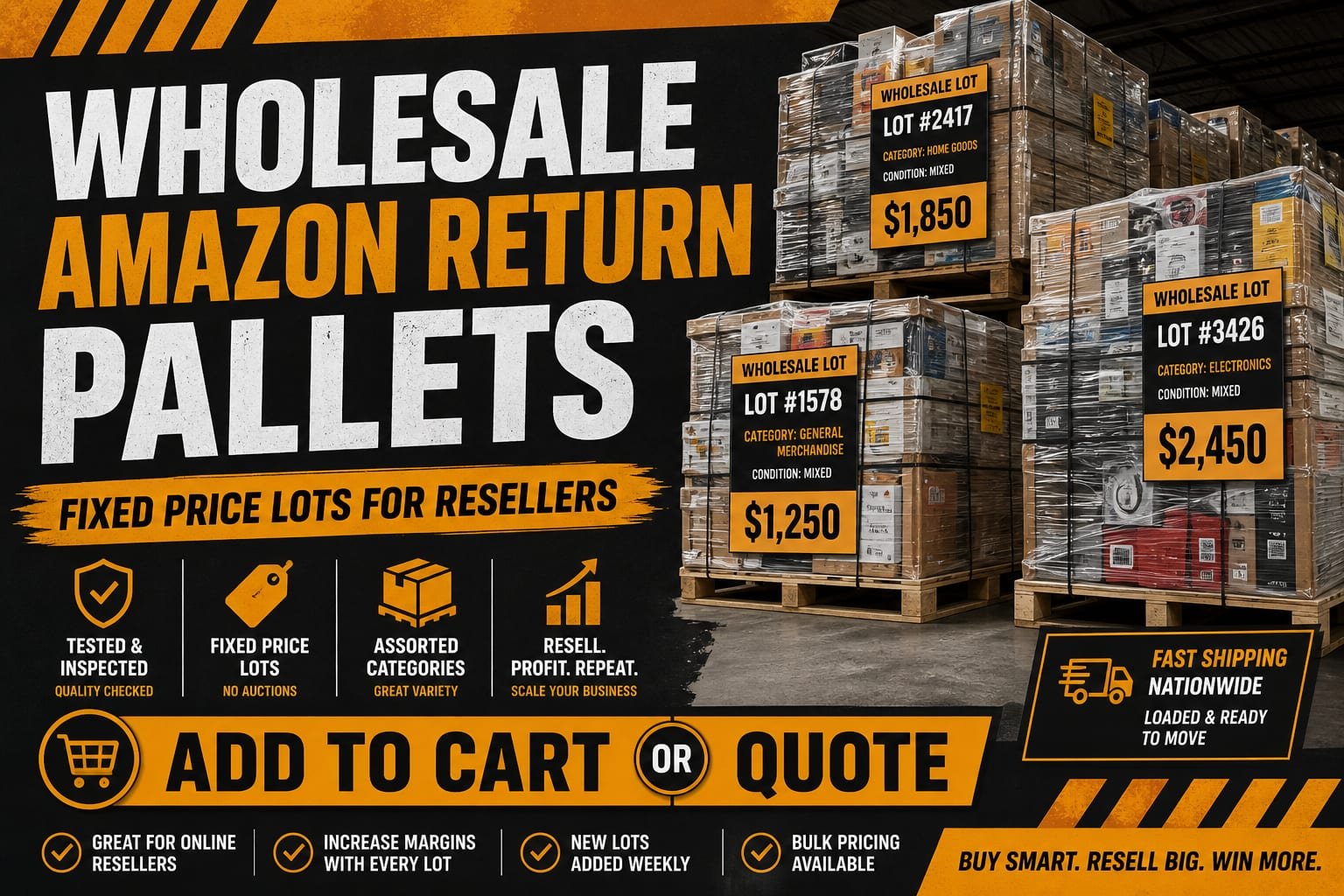
Wholesale Amazon Return Pallets: Commercial Lots for Resellers
Wholesale Amazon return pallets for sale — commercial pricing language, reseller CTAs, and links across the Amazon buy cluster.
11 min read
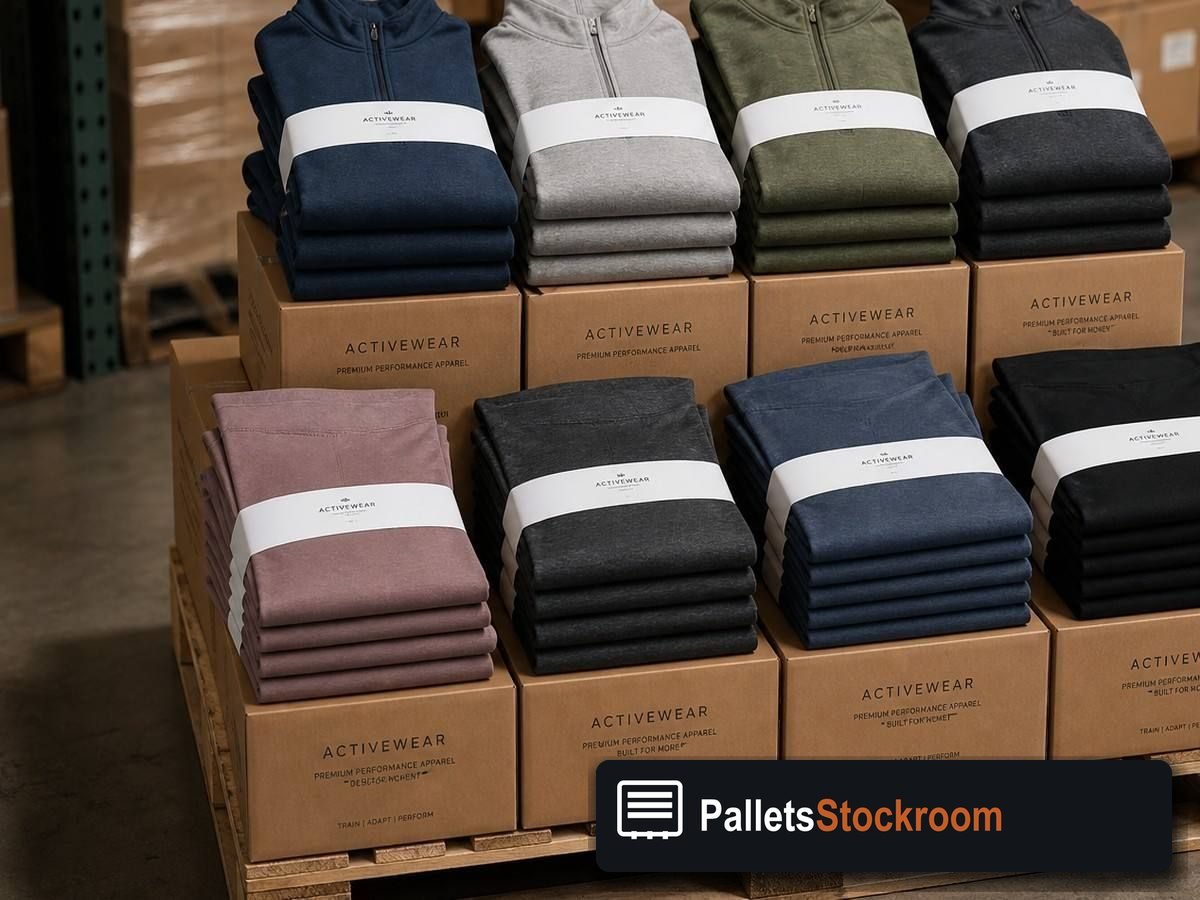
How to Resell Lululemon Pallets: Sorting, Photos, and Margin Math
Practical resale playbook for Lululemon-class pallets — sort by size, photograph for marketplaces, use the lot manifest, and apply −15% when eligible.
12 min read