

Buying Guides · 9 min read
Buy Amazon Liquidation Pallets 🧾 The Transaction, Step by Step, From Reserve to Receipt
What actually happens between clicking buy and cutting the wrap: reserving, paying, booking the move, receiving properly, and documenting a lot so any question later has an answer.
🧾 Plenty has been written about choosing a pallet. Far less has been written about the twenty-four hours either side of the money changing hands, which is where most avoidable problems are created. This guide is the transaction itself as we run it from the desk: how a lot gets reserved, what payment confirms and what it does not, how the move is booked, what to do in the first hour after the load lands, and which records to keep so that if something is genuinely wrong there is evidence rather than a memory. None of it is complicated. All of it gets skipped.
🏷️ Grade shown before price · 📸 merchandise photographed on the wood · 💵 no buyer's premium at checkout.
Open the shop and pick a lot1️⃣ Before you commit: read the listing in this order
Read the grade first, the source second, the photographs third, and the price last. That order matters because reading price-first makes every other field look like a justification. A Customer Returns lot and an Open Box lot can sit at similar prices and demand completely different amounts of your evening. If the listing has blank fields, those blanks are part of the description — treat them as unknowns to price, not as details somebody forgot to type in.
🧮 Work out your ceiling before you look at the price
Decide what the lot is worth to you before the number on the page anchors you. Take what you think you can realistically sell through in your channel over a couple of months, subtract your handling hours, your storage, and your disposal, and what remains is the most the pallet plus its delivery can cost. Do this on paper for the first few lots. It feels laborious and it is the single habit that separates buyers who repeat from buyers who buy once, get a shock, and blame the industry.
📦 Choose the movement method now, not at checkout
Collection and delivery produce different landed costs and sometimes reverse which lot is the better buy. If you are collecting, confirm you have a vehicle that can take a wrapped unit load and somewhere to put it at the other end. If it is going on a lorry, work out now whether the delivery address has a dock, whether a liftgate is needed, and whether the vehicle can physically reach the door. Every one of those questions is cheaper asked now than discovered with a driver waiting.
2️⃣ Reserving, paying, and what each step actually means
Reserving takes a listed lot out of circulation so it is not sold twice. Payment confirms the order and is what releases the lot to be prepared and moved. Those are two different events and it is worth knowing which one you are at, because a reserved lot is held and an unpaid one eventually is not. Delivery charges are quoted separately from the pallet price rather than folded in, which is why the number on the product page is the number for the goods and nothing is added to it at checkout.
| Stage | What it means | What it does not mean |
|---|---|---|
| 🛒 In cart | You are holding a place while you decide | The lot is not yet reserved for you |
| 📌 Reserved | The lot is taken out of circulation | Delivery is not yet booked or costed |
| 💳 Paid | The order is confirmed and preparation begins | The load has not necessarily left the floor |
| 📅 Booked | Collection slot or carrier movement is arranged | A booked date is a plan, not a guarantee against delays |
| 🚚 In transit | The load is with the carrier | Damage in transit is a carrier matter, evidenced on delivery |
| 📥 Received | You have signed for it and it is yours to work | Signing clean makes later transit claims very difficult |
✍️ Signing for a load is a legal act, so slow down
Before you sign anything, walk the unit. Look at the wrap, the banding, the base cartons, and whether the load is square or leaning. If something is visibly wrong, write what you see on the delivery note before you sign it — not afterwards, and not as a general grumble. A specific written note at the point of delivery is the difference between a claim with evidence and a conversation about what somebody remembers. Photograph the load on the vehicle if you can, and again on the ground before the wrap is cut.
3️⃣ The first hour after the wrap comes off
This is the hour that decides whether any later question is answerable. Work through it in a fixed order every time, because the discipline is what produces useful records. It is also the hour when the temptation to dive into the interesting-looking cartons is strongest, and giving in to that is how loads end up half-sorted across a floor for a week.
- Photograph the unit wrapped and on the ground, from two sides, before touching it.
- Cut the wrap from the top down and photograph the load open before destacking.
- Destack onto a bench or clear floor squares. Do not open cartons yet.
- Check the received grade against what is physically there — does Mixed look mixed, do Returns look like returns?
- Only now begin triage into sellable, needs-work, bundle, and unsaleable lanes.
- Log the lane shares and your hours the same day, while the numbers are real rather than remembered.
🔍 What counts as a genuine mismatch
A material difference from the listing is something like receiving a fundamentally different category from the one described, or a grade that does not correspond to what arrived at all. That is worth raising, with photographs, promptly. What is not a mismatch is a returns lot containing returns: opened boxes, incomplete sets, worn items, and things you would not personally have chosen are the normal contents of that grade. Liquidation is sold as described rather than as preferred, and preference is not a listing error. Read the returns policy before you buy, not after.
🗂️ The records worth keeping for every lot
- 📷 Arrival photographs — wrapped, opened, and destacked.
- 🧾 Order confirmation, delivery note with any written exceptions, and the freight cost.
- 📄 The manifest as received, if one came with the load.
- ⏱️ Hours spent on receiving, triage, cleaning, and listing.
- 📊 Lane shares — sellable, needs-work, bundle, unsaleable — as percentages.
- 💰 Actual sell-through at thirty and sixty days, so the next bid is informed.
A lot with records is an asset. A lot without them is an anecdote.
Dock, liftgate, residential access, and collection timing — worth ten minutes before you buy, not after.
Read shipping and collection terms🧠 Mistakes we watch first-time buyers make
The pattern is remarkably consistent. Someone buys on price rather than grade, has nowhere prepared to put the load, opens the interesting cartons first, never records their hours, and then judges the whole channel on one badly-run lot. None of those failures are about the merchandise. Prepare the space, book the movement deliberately, work a fixed receiving order, and write down what actually happened, and the same pallet becomes a manageable, repeatable piece of work.
⚖️ Trademarks, non-affiliation, and evidence
Amazon and any other retailer or brand referenced here are trademarks of their respective owners, mentioned only to describe merchandise that may appear in a lot. Pallets Stock Room is not affiliated with, endorsed by, sponsored by, or an authorised liquidation partner of Amazon or any other retailer. We state a source only when our supplier stated it to us, we include manifests only as supplied, and we leave fields blank rather than filling them with assumptions. Estimated retail figures, where shown, are a ceiling signal and not a prediction of what you will realise. Nothing here is financial advice or a guarantee of profit.
❓ FAQ
How do I buy a liquidation pallet from you?+
Open a listing, read the grade and source, add an available lot, and check out. The listed price is the pallet price with no buyer's premium. Delivery is quoted separately, or choose collection and we confirm dock timing once the lot is reserved.
Is the price on the page the final price for the goods?+
Yes for the pallet itself. Nothing is added at checkout as a premium. Delivery, liftgate, and residential access are quoted separately when they apply, because they depend on where the load is going.
What should I do the moment a pallet is delivered?+
Walk the load before signing, note any visible damage in writing on the delivery note, and photograph it wrapped and on the ground. Then destack and triage in a fixed order. Those first steps are what make any later question answerable.
What if the pallet is not what the listing described?+
Contact us promptly with photographs. A material difference from the stated category or grade is something we will review. A returns lot containing typical returns is not a mismatch, and preference about the mix is not a listing error.
Can I collect instead of having it delivered?+
Yes, and it removes the freight line from your landed cost. Request collection when ordering. Bring a vehicle that can take a wrapped unit load, and make sure you have somewhere to put it at the other end.
Do I need an account to browse?+
No. Listings, grades, photographs, and prices are visible without registering. You provide details when you actually order or request a quote.
How many pallets should I buy first?+
One, in a category you already sell, worked end to end with your hours recorded. Scale only after you know your own lane shares and sell-through. Buying volume before you know those numbers is guessing with more money.
Name the lot, tell us your access and postcode, and we will tell you what the move looks like.
Talk to the desk before you commitReady to buy · transactional
Shop this guide — order pallets now
On-site listings and checkout paths referenced in this article.
Same topic · informational partner guide
Buy amazon liquidation pallets for sale online at PalletsSource
Same topic — online buying journey. Buy wholesale pallets online — listed price, checkout, Customer Care.
Buy amazon liquidation pallets for sale online at PalletsSourceSame topic · informational partner guide
Shop amazon liquidation pallets for sale with confidence at PalletsBay
Same topic — trust-first buying guide. Clear lots. Clear price. Confidence to buy.
Shop amazon liquidation pallets for sale with confidence at PalletsBayBuy on PalletsSource + PalletsBay · commercial + transactional
Order wholesale pallets on partner storefronts
Checkout, bulk quotes, and the same-topic guide on each partner domain.
More from the blog
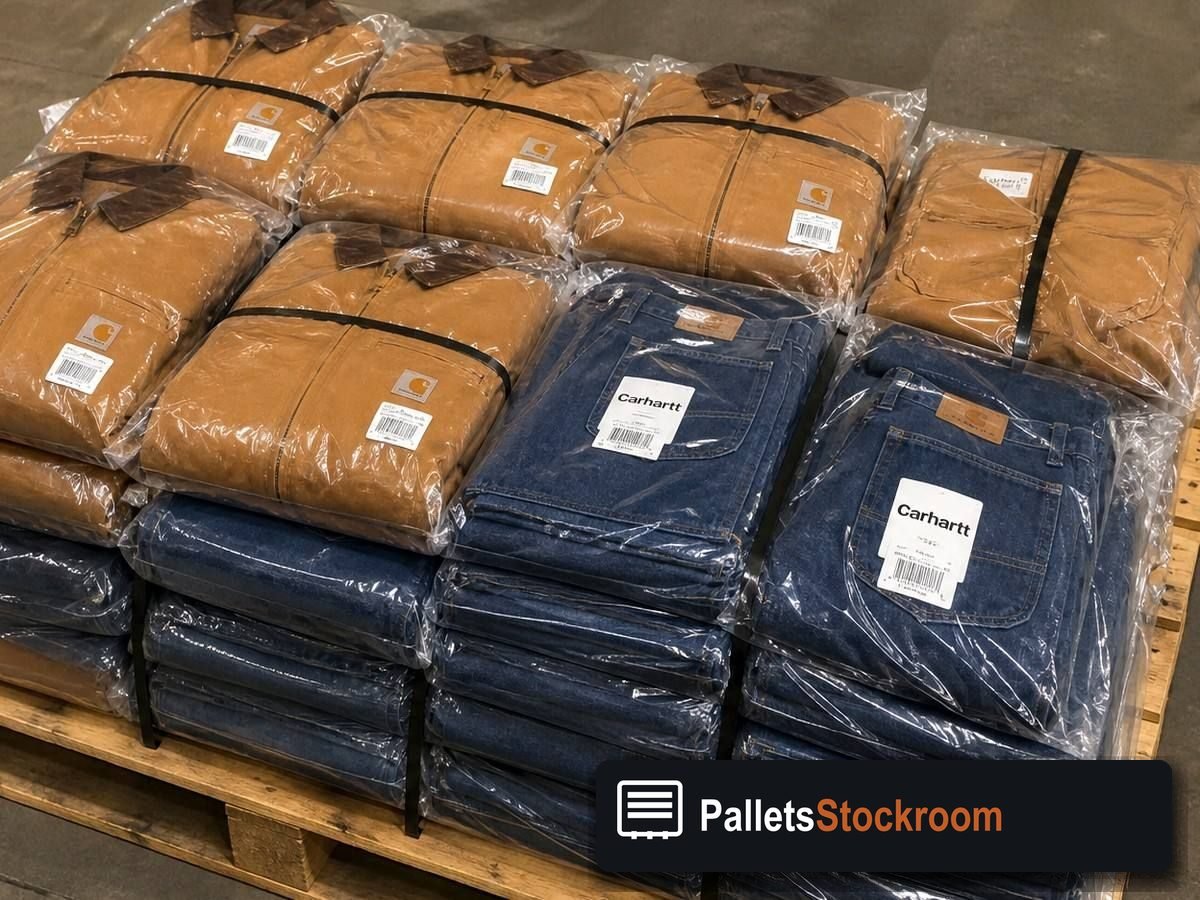
First Clothing Pallet Buyer Checklist: From Gallery to Cart at the Stockroom
Step-by-step checklist for first-time clothing pallet buyers — lot photos, manifest, −15% STOCKROOM15, grading, payment, and pickup or freight.
11 min read
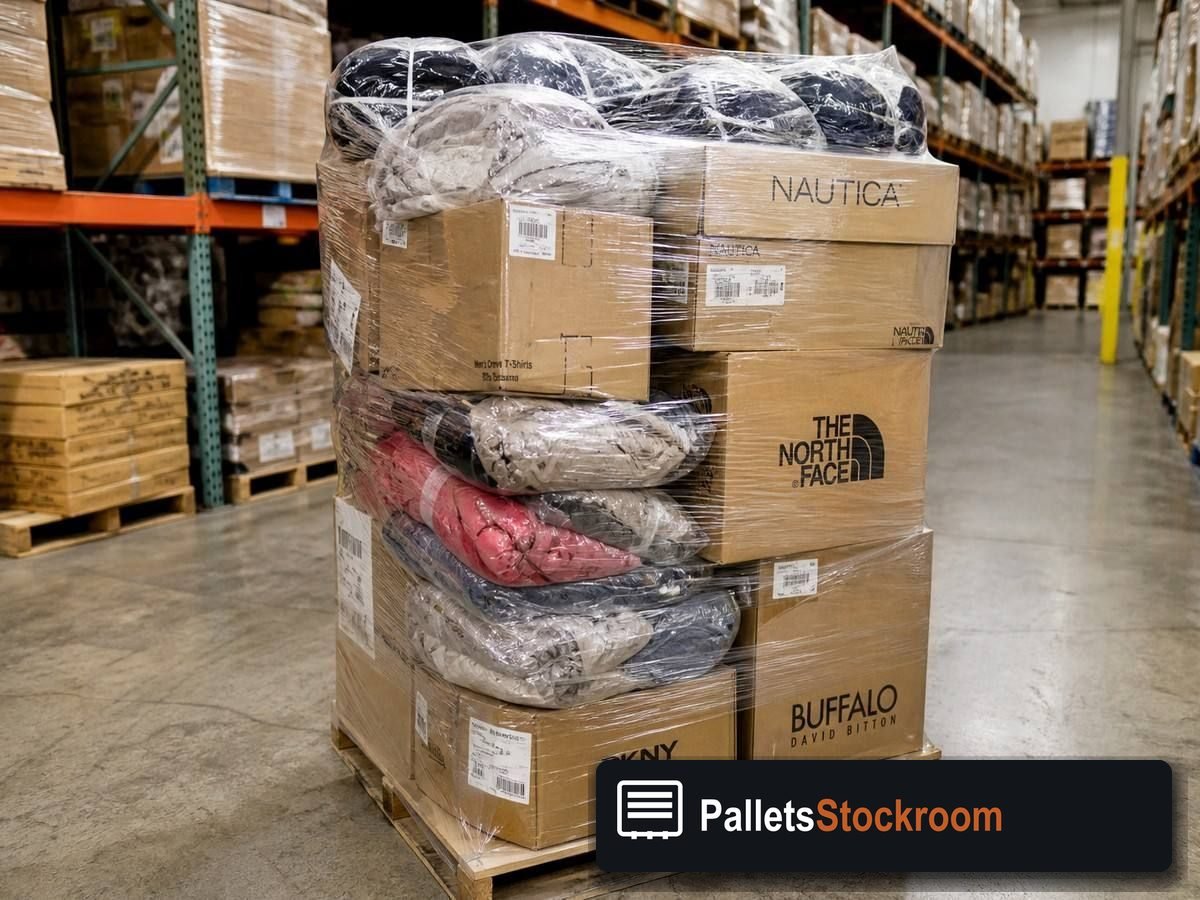
Apparel Returns Pallets: Buying Customer-Return Clothing Lots Honestly
How to buy apparel returns pallets at Pallets Stock Room — Mixed grades, lot manifests, −15% promo, and what product returns really mean for resellers.
11 min read