

Buying Guides · 7 min read
How to buy pallets of Amazon returns at scale without guessing
Moving from one pallet to several: category discipline, footprint and weight planning, grouped freight, and a worksheet that survives volume.
Buying one pallet of returns teaches you the merchandise. Buying several teaches you the operation, and the operation is where most resellers either build a business or quietly run out of floor space. This guide is about the second stage: how to choose categories that stack together, how to plan footprint and dock time before the truck books, and how to keep a worksheet honest when several lots are landing in the same week.
📦 Decide the category mix before the price
At volume, category discipline matters more than any individual price. Two footwear pallets in a category you already sell will nearly always beat four random mixed lots that happen to be cheaper per pallet, because your listings, your photography setup, your packaging materials, and your buyers are already aligned to the first. Mixed general merchandise is genuinely useful once you have a fast sorting routine and a channel that absorbs variety — it is a hard place to start when you are also learning to grade.
How categories behave on a sorting table
- Footwear sorts fast because pairs are obvious, but it eats shelf space and demands size discipline in your listings.
- Tools sort slowly because anything with a battery or a cord needs testing, and they reward sellers who can describe a fault accurately.
- Apparel is light and cheap to move, but it needs cleaning, steaming, and photography time before it sells.
- Home goods and general merchandise vary the most within a single pallet, which is exactly why the grade line matters.
- Electronics carry the widest spread between a clean unit and a parts unit, so grade your own output carefully before listing.
Two pallets of the same thing beats a scattergun
Repeat buys inside one category give you comparison data. When your second tool pallet lands, you finally know whether the first one was typical or lucky, and that comparison is worth more than the novelty of a different category.
📐 Footprint, weight, and the space you forget to plan
A pallet is not just a purchase, it is a physical object that has to live somewhere. Before you buy three, walk your space and mark where each one will land, where the sorting table goes, and where the sorted output stacks. The most common failure at this stage is not financial: it is a garage where the second pallet cannot be opened because the first one is still in pieces on the floor.
| Question | Why it matters | Decide before you pay |
|---|---|---|
| Where does each pallet land? | Wrapped pallets in walkways become hazards | Mark the floor positions |
| Can you unload it? | No dock and no forklift means liftgate delivery | Confirm liftgate on the quote |
| How long to sort one lot? | Sorting time is your real constraint, not cash | Estimate hours per pallet |
| Where does sorted stock go? | Output needs shelving, not floor sprawl | Clear the shelving first |
| What is the write-off plan? | Scrap and parts units need a route out | Know your disposal option |
| Can your channel absorb the volume? | Listing capacity limits everything downstream | Match pallets to listing hours |
Send your pallet count, preferred categories, and destination ZIP — or ask about pickup — and the desk will work the movement with you before you commit.
Request a multi-pallet quote🚚 Grouped freight and dock operations
Movement costs behave differently once you buy more than one lot. Pallets travelling together to one destination are usually quoted as a group rather than as separate shipments, and the details of your address change the number more than most buyers expect. A commercial address with a level dock is the simplest case. A residential delivery with no equipment needs a liftgate and a driver who can work the street. Tell the desk the truth about your site and the quote will match reality.
Pickup at volume
Collecting several pallets is often the cheapest movement available, provided your vehicle and your help are real. Confirm dock timing after the lots are reserved, arrive inside your window, bring straps and corner protection, and plan the load order so the last pallet on is the first one you want off. A box truck with a ramp and one extra pair of hands changes what is possible on collection day.
Load order is a five-minute decision that saves an hour
Load the pallet you intend to sort last against the bulkhead. Unloading in reverse order is how a two-person collection stays a two-person job.
Dock rule
Nothing leaves the dock unstrapped. A shifted pallet on the road is a worse outcome than any delay you avoided.
🧮 A worksheet that survives volume
One-pallet maths forgives a lot of sloppiness. Multi-pallet maths does not, because a strong lot will happily conceal a weak one if you only track the order total. Keep one worksheet per pallet and one summary sheet across the order, and make sure the per-pallet sheet is the one you use when deciding what to buy again. The structure below is illustrative — no figure here is a projection of what any lot will return.
| Metric | Tracked per pallet | Tracked per order |
|---|---|---|
| Merchandise cost | Yes — the listed pallet price | Sum of lots |
| Movement | Allocated share of the grouped quote | Full freight or fuel |
| Sorting hours | Yes — this is the key comparison | Total week load |
| Sellable units produced | Yes | Sum |
| Write-offs | Yes — by category | Sum |
| Cost per sellable unit | Yes — the deciding number | Blended average |
| Repeat decision | Per category | Per supplier |
- Allocate grouped freight across pallets by weight or by count, and use the same rule every time so your history stays comparable.
- Log sorting hours honestly. Undercounting your own labour is the most common way a reseller convinces themselves a bad category is good.
- Review the per-category numbers monthly, not per order — small samples lie.
🔁 Scaling the reseller workflow
- Stage arriving pallets in numbered floor positions so nothing gets confused mid-week.
- Sort one pallet completely — including listing — before opening the next. Half-sorted lots are how inventory becomes clutter.
- Keep a consumables shelf stocked before the delivery, not after: bags, tape, labels, and spare cartons.
- Batch your photography rather than shooting unit by unit throughout the day.
- Close each pallet’s worksheet the day the last unit is listed, while the labour figures are still accurate.
- Only then decide what the next order should contain.
⚠️ Trademark, affiliation, and evidence
Amazon is a trademark of Amazon.com, Inc. Pallets Stock Room is not affiliated with, endorsed by, or sponsored by Amazon, and nothing on this page describes an official retailer programme. Lots described as Amazon return pallets are customer-return or surplus merchandise that moved through that retail channel before reaching the liquidation market, described using the sourcing detail our supplier supplied. We publish manifests, piece counts, and condition claims only when they were supplied and verified for the specific lot, and we make no promise about what any pallet will earn.
Variety lots for sellers with a fast sorting routine — condition stated, listed price is the pallet price.
Browse general merchandise pallets❓ FAQ
How many pallets should I buy at once?+
As many as you can sort and list within the week they arrive. Cash is rarely the binding constraint at this stage; sorting hours and shelf space almost always are.
Do multiple pallets ship cheaper than one?+
Pallets moving together to one destination are usually quoted as a group, which often improves the per-pallet movement cost. Send the count and ZIP and the quote will reflect your actual delivery site.
Should I mix categories in one order?+
Mix only when each category already has a home in your sales channel. Otherwise buy depth in one category, because comparison data across similar lots is what makes your buying better.
Is a manifest more likely on larger orders?+
No. A manifest appears when the supplier provided one for that lot, regardless of how many pallets you order. We do not create one to close a larger sale.
What equipment do I need for multiple pallets?+
At minimum a pallet jack or strong help, a clear landing zone, a sorting table, shelving for output, and either a dock or a liftgate on the delivery. Plan the equipment before the truck, not after.
How do I know a category is worth repeating?+
When two or more lots in that category produce a similar cost per sellable unit and your channel absorbed the output without discounting. One good lot is an anecdote; a repeated result is a pattern.
Ready to buy · transactional
Shop this guide — order pallets now
On-site listings and checkout paths referenced in this article.
Same topic · informational partner guide
Buy amazon return pallets for sale online at PalletsSource
Same topic — online buying journey. Buy wholesale pallets online — listed price, checkout, Customer Care.
Buy amazon return pallets for sale online at PalletsSourceSame topic · informational partner guide
Shop amazon return pallets for sale with confidence at PalletsBay
Same topic — trust-first buying guide. Clear lots. Clear price. Confidence to buy.
Shop amazon return pallets for sale with confidence at PalletsBayBuy on PalletsSource + PalletsBay · commercial + transactional
Order wholesale pallets on partner storefronts
Checkout, bulk quotes, and the same-topic guide on each partner domain.
More from the blog
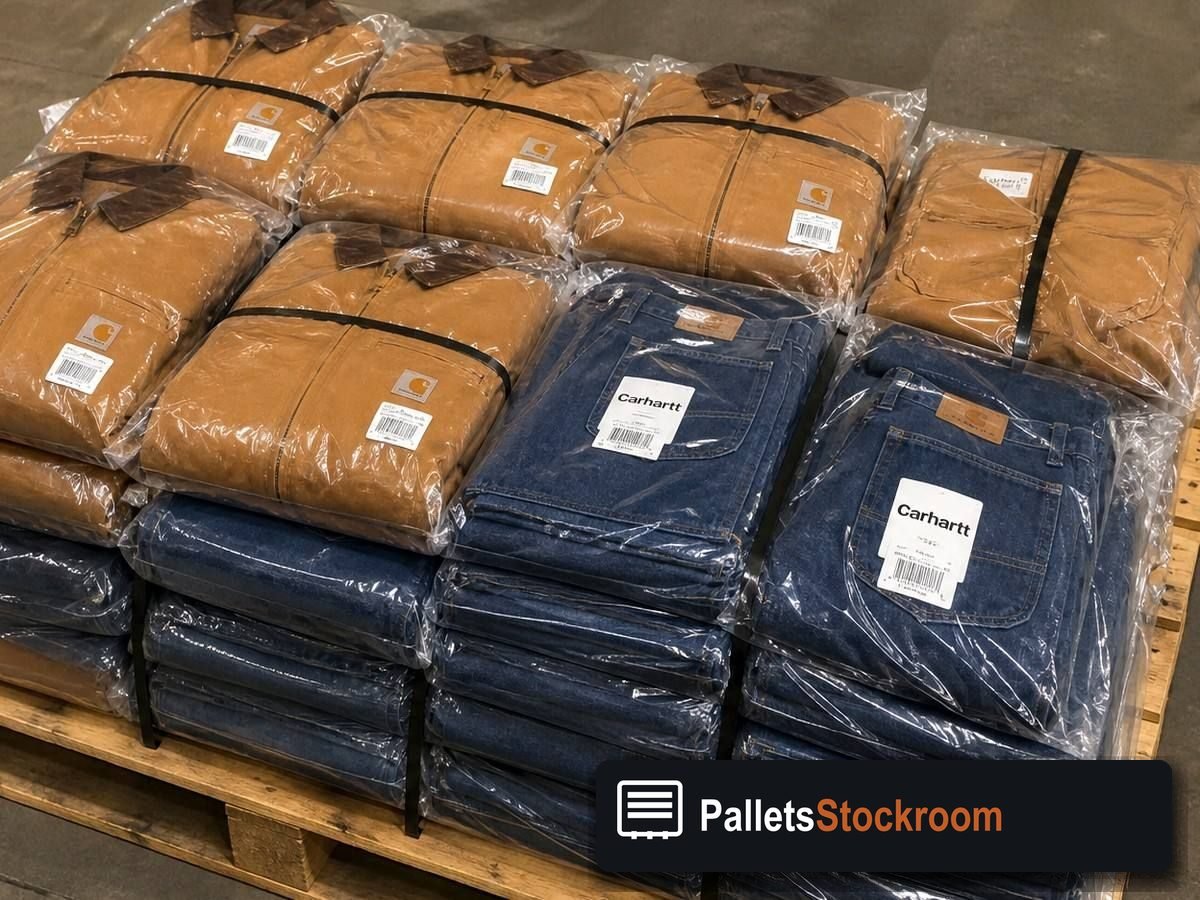
First Clothing Pallet Buyer Checklist: From Gallery to Cart at the Stockroom
Step-by-step checklist for first-time clothing pallet buyers — lot photos, manifest, −15% STOCKROOM15, grading, payment, and pickup or freight.
11 min read
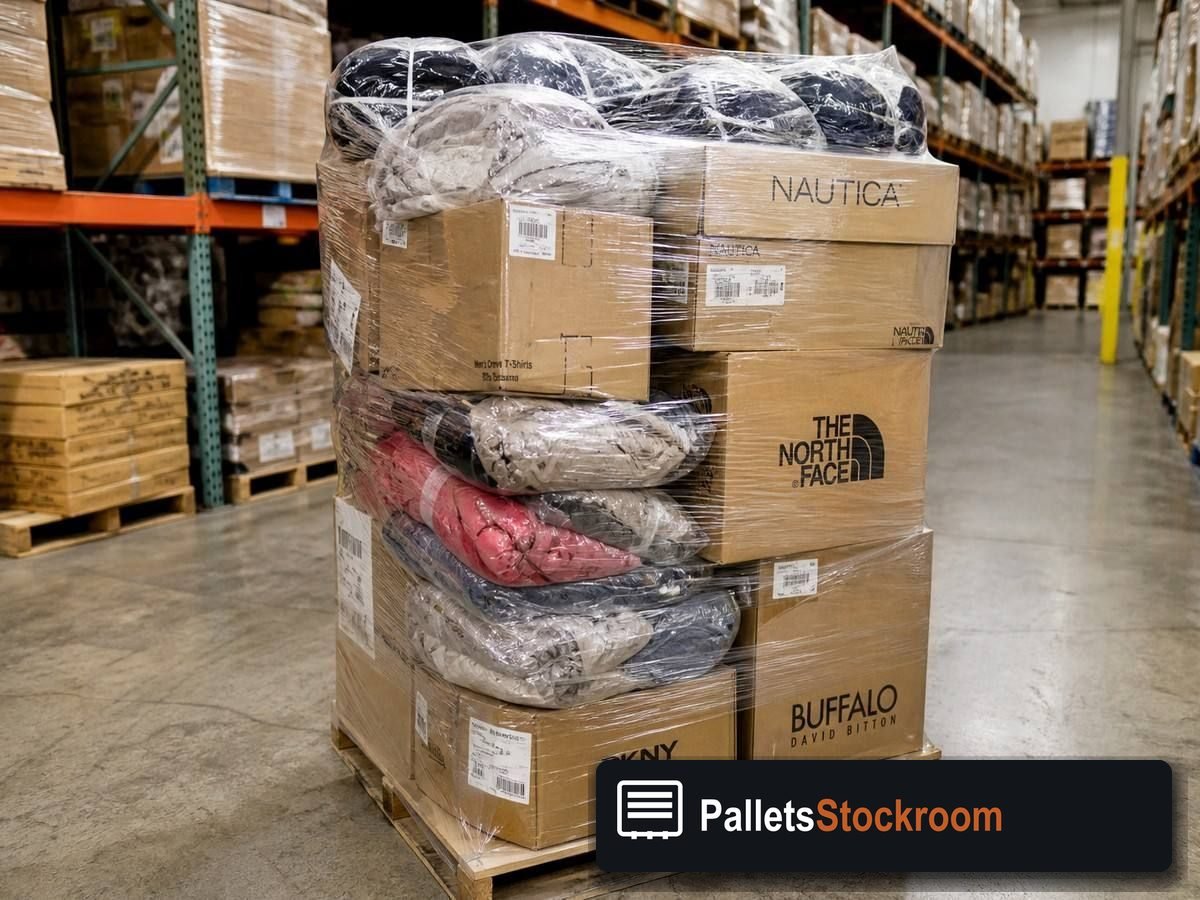
Apparel Returns Pallets: Buying Customer-Return Clothing Lots Honestly
How to buy apparel returns pallets at Pallets Stock Room — Mixed grades, lot manifests, −15% promo, and what product returns really mean for resellers.
11 min read