
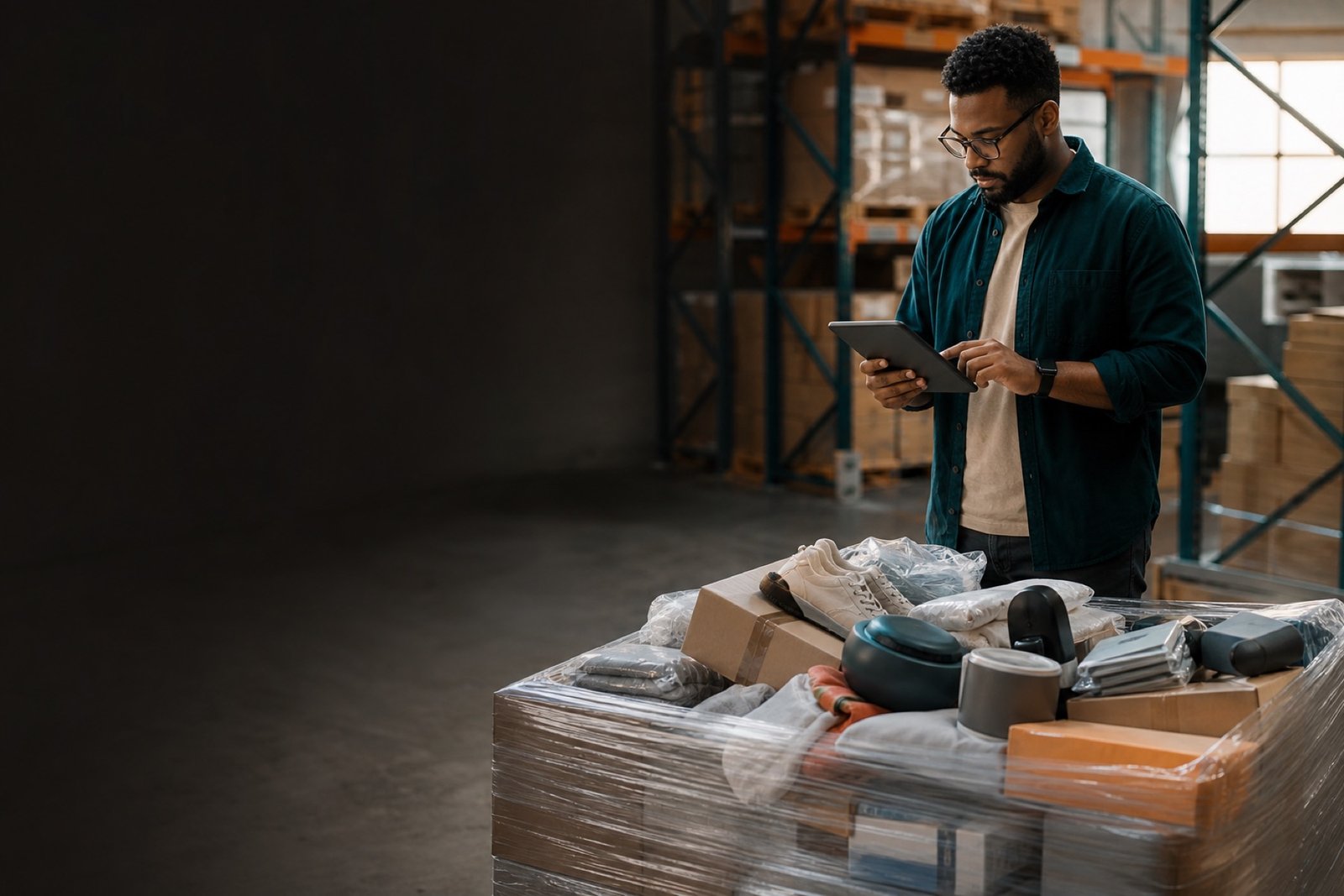
Buying Guides · 7 min read
How to purchase an Amazon pallet, step by step from cart to dock
The full purchase sequence for a single lot: reading the page, checking out, confirming the order, arranging movement, and receiving it properly.
Most guides about buying a pallet stop at the moment you click the button, which is exactly where new buyers actually need help. This one runs the whole sequence: how to read the listing, what to settle before payment, what a clean order confirmation contains, how movement is arranged, and what to do in the first hour after the pallet is on your floor. It is written for a single lot, because one pallet handled properly teaches more than three handled in a rush.
🧾 Step one: read the listing like a buyer, not a browser
Open the product page and work top to bottom. The category tells you the merchandise class. The condition grade tells you the state of the goods and therefore your workload. The photographs show what the class looks like on the wood. The price is the pallet price — there is no buyer’s premium bolted on afterwards. If a manifest exists it will be there; if it does not, the absence is the honest answer rather than an oversight.
The three questions to answer before the cart
- Does this merchandise class sell in the channel I already run, at a price my buyers accept?
- Can I move it — pickup within a sensible drive, or freight I have priced to my ZIP including liftgate if my site needs one?
- Do I have the hours and the floor space to sort it in the week it arrives?
If any answer is no, the right move is to wait rather than to hope. Pallets are patient. Storage problems and unsorted stock are not.
💳 Step two: checkout and payment hygiene
Checkout should be uneventful, and if it is not, that is information. Confirm the total matches the listed pallet price plus any separately quoted movement. Use a payment method that leaves you a record and a route to dispute — published payment options exist so that you are not asked to send money through a channel with no recourse. Keep the confirmation, and keep any message thread where movement details were agreed.
| Element | Why it matters | Where to keep it |
|---|---|---|
| Order confirmation | Proves what was bought at what price | Email plus your own folder |
| Listing screenshot | Preserves the condition grade as published | Same folder as the order |
| Movement agreement | Pickup window or freight quote and terms | Message thread, saved |
| Arrival photographs | Evidence of how the pallet actually landed | Phone album per order |
| Sorting worksheet | Turns the buy into data you can reuse | Spreadsheet, one tab per pallet |
Condition stated, listed price is the pallet price, and freight is quoted separately so nothing is hidden in the headline.
Shop available pallets🚚 Step three: arrange the movement deliberately
Movement is where a straightforward purchase most often turns awkward, almost always because a detail went unmentioned. If you are collecting, say so at order time so dock timing can be confirmed after the lot is reserved, then arrive inside the window with straps and a vehicle that genuinely fits a loaded pallet. If it is riding freight from the USA, provide the destination ZIP and describe the site honestly: dock or no dock, forklift or no forklift, commercial or residential, and any street or access limitation the driver will meet.
The five site facts that change a freight quote
- Whether the address is commercial or residential.
- Whether there is a loading dock at the correct height.
- Whether you have a forklift, a pallet jack, or only hands.
- Your receiving window, including days you cannot accept a delivery.
- Any narrow access, low clearance, or parking restriction on the street.
Liftgate is not an upsell
If there is no dock and no forklift, a liftgate is the equipment that gets a pallet from the truck bed to the ground safely. Declining it to save a line on the quote simply moves the problem to the kerb, with a driver who cannot help you.
Receiving rule
Photograph the pallet before you sign, and note any visible damage on the delivery paperwork at the moment of receipt rather than afterwards.
📋 Step four: the first hour on your floor
- Park the pallet in a cleared landing zone, not a walkway, and leave the wrap on until you are ready to work it.
- Take four corner photographs and one overhead shot, plus close-ups of any crushed or retaped carton.
- Cut the wrap from the top down and stage cartons on a table, keeping the pallet itself clear for output.
- Sort into three zones — list now, needs work, parts or scrap — and refuse to re-handle the same unit twice.
- Test anything with a cord or a battery, and describe results in your own listings exactly as you found them.
- Close the worksheet as units go live so cost per sellable unit is built from real numbers, not memory.
🧮 Step five: judge the buy on the right number
When the sorting is finished, resist judging the pallet by the most exciting single item in it. The number that matters is total landed cost divided by the units you actually listed, compared against what your channel pays. Do that once and you have an opinion. Do it across several lots in the same category and you have a buying strategy. The table below shows the shape of that calculation; the figures will be entirely your own.
| Stage | Number you record | Decision it supports |
|---|---|---|
| Purchase | Listed pallet price | Baseline cost |
| Movement | Freight or fuel and hours | True landed cost |
| Sorting | Hours spent at your own rate | Whether the grade suited you |
| Output | Units listed, units scrapped | Real recovery in this category |
| Sales | Average realised price per unit | Channel fit |
| Verdict | Cost per sellable unit | Repeat, adjust, or stop |
⚠️ Trademark, affiliation, and evidence
Amazon is a trademark of Amazon.com, Inc. Pallets Stock Room is not affiliated with, endorsed by, or sponsored by Amazon, and purchasing here is not purchasing from Amazon. Merchandise described as an Amazon pallet is customer-return or surplus inventory that moved through that retail channel before entering the liquidation market, described using the sourcing information our supplier gave us. We do not promise resale value, unit counts, brand rosters, or working condition, and any such detail appears only when it was supplied and verified for that specific lot.
Name the lot and the question. You will get the notes we actually hold — and a straight answer when we do not hold them.
Ask the desk about a specific listing❓ FAQ
Can I buy a single pallet, or is there a minimum?+
Single pallets are a normal order. Larger programmes and truckload volumes run through a bulk quote instead, so the movement can be planned properly.
Is the listed price really the final merchandise price?+
Yes for the pallet itself — there is no buyer’s premium. Freight is quoted separately when you need the lot shipped, and pickup avoids that line entirely.
How will I know when it ships?+
Order and movement details are confirmed after the lot is reserved, and tracking information follows the arrangement made for your order. Keep the confirmation and the message thread together.
What if the pallet arrives damaged?+
Photograph it before signing, note visible damage on the delivery paperwork at receipt, and follow the published returns and refunds policy. Evidence gathered at the kerb is worth far more than a description written the next day.
Can I choose which items are on the pallet?+
No. You are buying a lot by category and condition, not a hand-picked selection. If you need a specific merchandise class, choose the category that matches and read the grade carefully.
Should my first purchase be a returns lot or a cleaner grade?+
If your sorting time is limited, a cleaner grade gets you selling faster. If you have hours available and want the lowest merchandise cost, returns can work — provided your worksheet counts those hours honestly.
Ready to buy · transactional
Shop this guide — order pallets now
On-site listings and checkout paths referenced in this article.
Same topic · informational partner guide
Buy buy amazon pallet online at PalletsSource
Same topic — online buying journey. Buy wholesale pallets online — listed price, checkout, Customer Care.
Buy buy amazon pallet online at PalletsSourceSame topic · informational partner guide
Shop buy amazon pallet with confidence at PalletsBay
Same topic — trust-first buying guide. Clear lots. Clear price. Confidence to buy.
Shop buy amazon pallet with confidence at PalletsBayBuy on PalletsSource + PalletsBay · commercial + transactional
Order wholesale pallets on partner storefronts
Checkout, bulk quotes, and the same-topic guide on each partner domain.
More from the blog
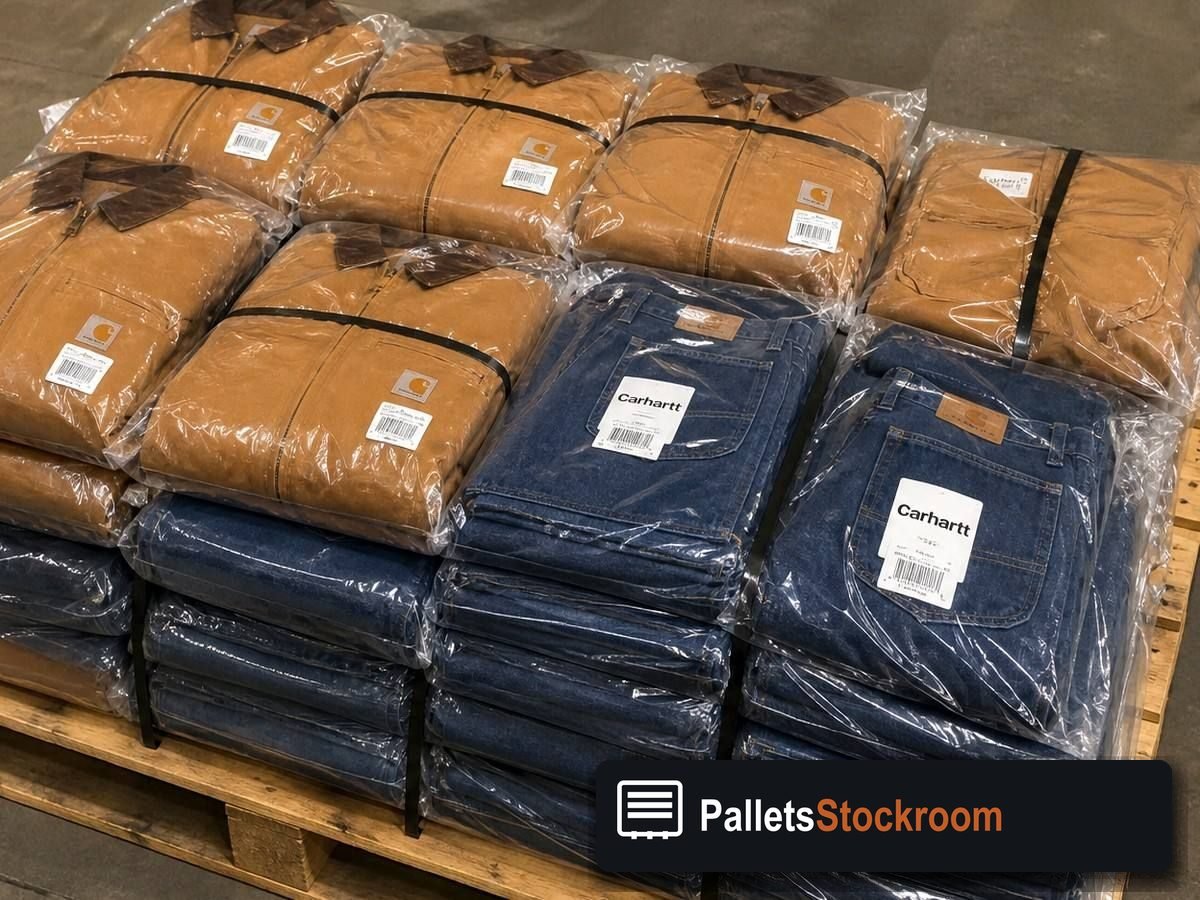
First Clothing Pallet Buyer Checklist: From Gallery to Cart at the Stockroom
Step-by-step checklist for first-time clothing pallet buyers — lot photos, manifest, −15% STOCKROOM15, grading, payment, and pickup or freight.
11 min read
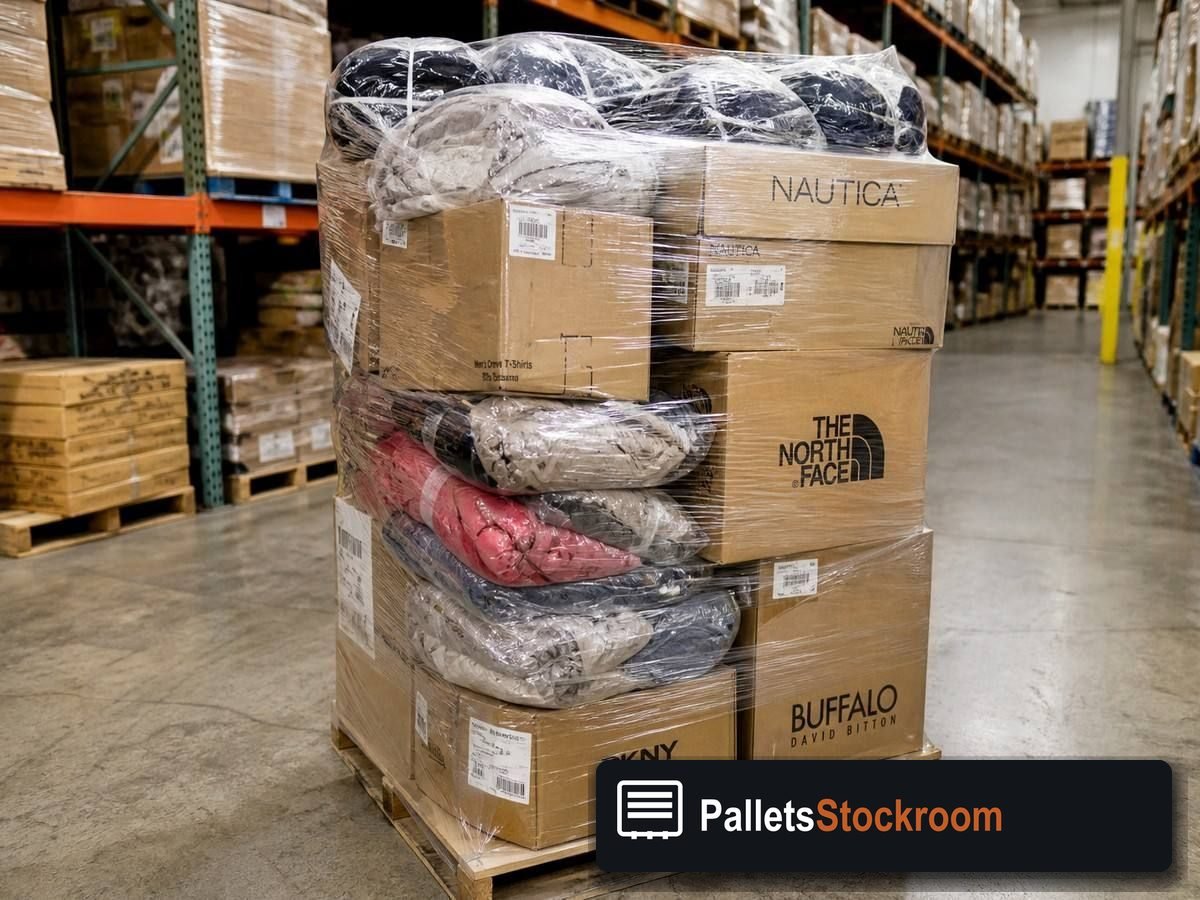
Apparel Returns Pallets: Buying Customer-Return Clothing Lots Honestly
How to buy apparel returns pallets at Pallets Stock Room — Mixed grades, lot manifests, −15% promo, and what product returns really mean for resellers.
11 min read