
Stockroom Notes · 9 min read
Stock Pallet 📦 What Actually Lands on a Receiving Floor (and How We Work It)
A stock pallet is inventory on wood, not a mystery box. Here is how our receiving desk logs one, grades it, triages it, and prices the space and labor it eats.
🧰 On our floor, a stock pallet is a simple thing: a unit load of merchandise, banded and wrapped, that arrives with a grade and leaves with a price. It is not a lucky dip and it is not a retail shelf that someone forgot to unpack. It is a block of inventory roughly forty-eight by forty inches at the base, stacked to whatever height the wrap will hold, and every inch of that block costs you floor space, labor minutes, and cash tied up until it sells. If you want a calm way to think about buying one, borrow the way a receiving desk thinks about it. We log it, we grade it, we triage it, and only then do we know what it was worth.
📸 Photos on the wood · 🏷️ stated source · ✅ condition grade · 💵 listed pallet price.
See stock pallets currently listed📥 Receiving: the first ten minutes decide the week
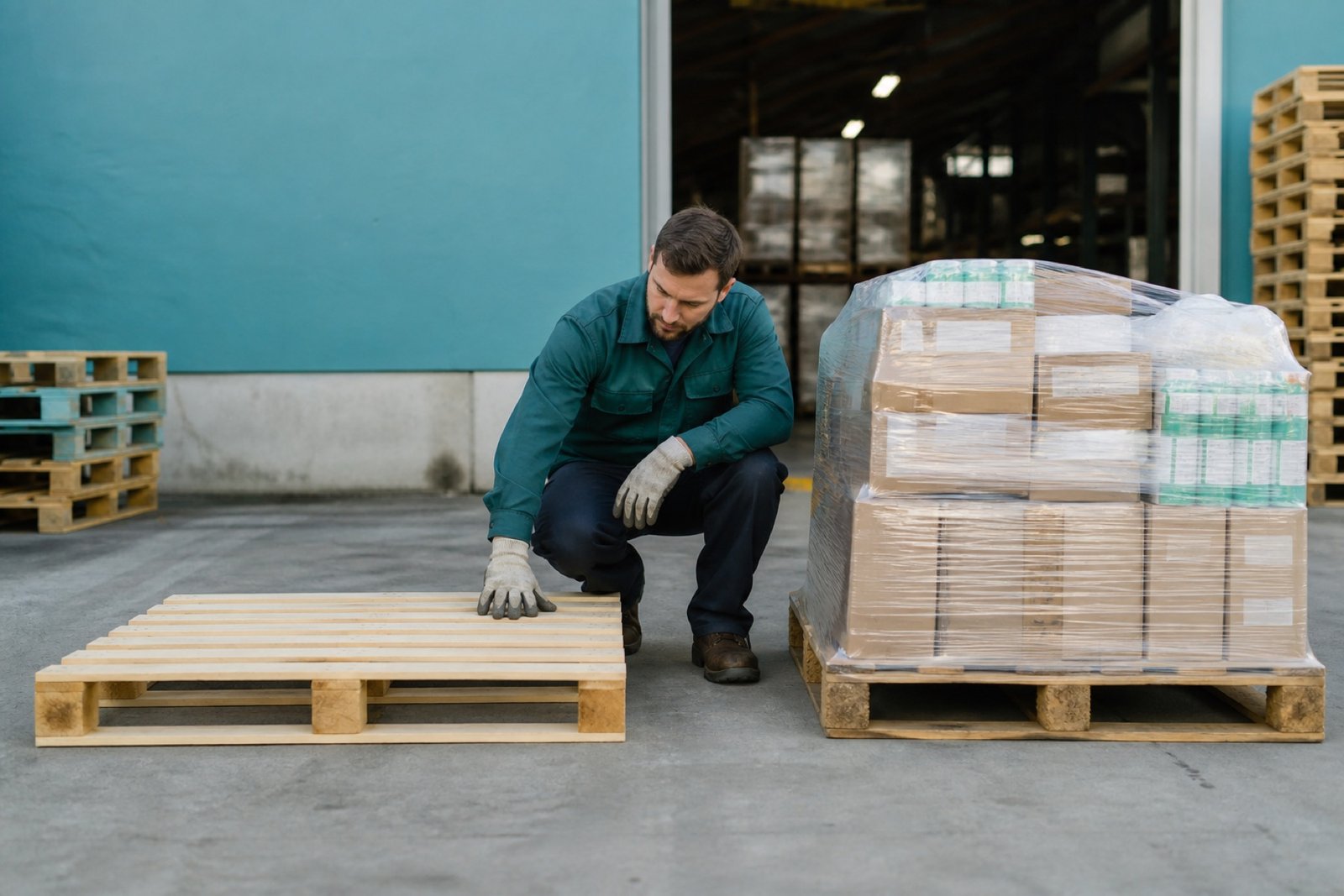
Every stock pallet gets the same intake whether it came off a fifty-three foot trailer or out of the back of a box truck at the pickup door. We photograph it wrapped, on the wood, before anyone touches a blade. We note the wrap condition, whether the load has shifted, whether the banding is cut, whether cartons at the base are crushed, and whether the bottom deck boards are sound enough to move on a jack. That photo set is the honest record of how the unit arrived, and it is the thing we look at first if a buyer later tells us something does not match. Nothing on that record is a marketing shot. It is evidence.
🪵 The wood is part of the buy
Buyers ignore the deck and then wonder why the pallet will not move. A stringer pallet with a split lead board becomes a two-person job with a hand truck instead of a thirty-second jack pull. A double-stacked load that was topped in transit will need a re-wrap before it can travel again. If you are receiving at a residential address or a small unit with no dock, the wood matters even more than the merchandise, because a liftgate drop puts the entire load on the ground and the condition of that base is the difference between rolling it inside and unpacking it in the rain.
🔢 What we write on the intake tag
- 📅 Arrival date and how it came in — inbound freight, our own truck, or buyer pickup staged for outbound.
- 📏 Footprint and wrapped height, because that decides whether it goes to floor, rack, or a sort lane.
- 🏷️ Stated source as the supplier gave it to us — retailer returns, overstock, shelf pulls, or end-of-life.
- ✅ Condition grade — New, Open Box, Used, Customer Returns, or Mixed.
- 📄 Whether a manifest came with the load, and whether it is a full list or a summary.
- ⚠️ Anything that looks wrong on arrival: crushed base cartons, cut banding, water staining, missing wrap.
🧾 Manifests are evidence, not a promise
When a manifest arrives with a stock pallet, we pass it along as we received it. When one does not, we say so and we leave the field blank. We do not build a piece count from a photo, and we do not estimate a unit list to make a listing look fuller. That habit costs us sales occasionally and it is still the right call, because an invented count is the fastest way to turn a fair lot into a dispute. Read a manifest as a description of what was loaded upstream, not as a guarantee of what every carton contains today.
Floor rule: if we cannot show it or source it, we do not print it
That rule is why some of our listings have blank fields. A blank field is information. It tells you to price the unknown rather than trust a number someone typed to close a deal.
| Stage | What happens | What it consumes |
|---|---|---|
| 📥 Receive | Photograph wrapped, check wood, log source and grade | 10–15 minutes and one dock position |
| 📦 Break down | Cut wrap, destack, sort cartons into lanes | Bench space and a rubbish stream |
| 🔍 Triage | Sort into sellable, needs-work, parts, and unsaleable | The largest labor block of the whole job |
| 🏷️ Grade & price | Match what is in front of you to the stated condition | Judgement, plus your own market knowledge |
| 🗄️ Store | Rack, shelf, or bin the sellable share | Square footage until each unit moves |
| 🚚 Move out | List, sell, pack, and ship or hand over | Packaging, postage, and time per unit |
🔀 Triage is the job. Everything else is admin.
A stock pallet does not become inventory until someone has touched every carton on it. We run triage in four lanes, and we recommend the same four lanes to buyers because it turns a vague pile into countable buckets. Lane one is sellable as-is: it works, it is complete, it can be photographed today. Lane two is needs-work: missing a cable, needs a clean, needs a re-box, needs a battery. Lane three is parts or bundle: individually not worth listing, worth something as a lot. Lane four is unsaleable, which is the lane everybody underestimates and the one that quietly sets your real margin.
🧮 Count the lanes before you count the profit
- Clear a bench and four floor squares before you cut the wrap. Sorting into a mess is how items get double-handled.
- Work one carton at a time and place it in a lane immediately. Do not create a fifth pile called 'decide later'.
- Tally each lane as a share of the whole pallet, not as a unit count — shares are what you can compare between lots.
- Photograph lane one the same day. Merchandise that is not photographed is merchandise that is not selling.
- Price lane two by the minutes it needs, not by what the item is worth new.
- Log lane four honestly. That number is the single most useful thing you will learn from your first stock pallet.
🕒 Labor is the cost nobody writes down
Ask anyone who has worked a returns load and they will tell you the same thing: the pallet price is rarely what hurts. What hurts is the evening you spent testing devices, the roll of tape, the trip to the tip, and the twenty listings you did not write because you were still sorting. Put a real hourly figure on your own time and multiply it by the hours a lot actually takes. If you have never timed yourself, time the first one. It changes how you bid on the second one, and it changes which categories you buy at all.
📐 Space is the other one
A stock pallet is roughly thirteen square feet of footprint before you break it down, and considerably more after, because the moment you destack you need lanes, a bench, and somewhere for the empty cartons. If you are working out of a single garage bay, two live pallets is usually the ceiling before the aisle disappears and you start moving the same box three times. Buy to your space, not to your ambition. A cheap pallet you cannot process is more expensive than a dearer one you can turn around in a weekend.
| Line | Where the number comes from | Notes |
|---|---|---|
| Pallet price | The listed price on the product page | No buyer's premium is added at our checkout |
| Freight or pickup | Quoted to your destination, or nil if you collect | Liftgate and residential are quoted separately when they apply |
| Handling in | Your minutes to receive and break down | Two people for one hour is two hours of cost |
| Triage labor | Your minutes to sort, test, clean, and re-box | The biggest and most variable line |
| Storage | Weeks of floor or rack space until sell-through | Slow categories occupy space longer |
| Disposal | Tip runs, recycling, or donation for lane four | Real cost even when the goods were free |
| Landed cost | The sum of every line above | Compare this against realistic sell-through, never against retail value |
Name the listing and your postcode or pickup preference. A person answers with what is on the floor.
Ask the desk about a specific lot🛒 Buying a stock pallet without guessing
Match the pallet to the way you already sell. If your channel is a market stall, general merchandise and home goods move because customers buy what they can carry. If you photograph and list online, apparel and footwear are predictable because sizing is a known variable and you can price by condition. If you have a bench and can test, electronics reward the effort but punish sloppy triage. Open the category first, read the grade second, and only then look at the price. Buying price-first is how people end up with a lane four they cannot clear.
🚚 Pickup or freight: pick before you buy, not after
Collection removes an entire cost line and gives you the chance to look at the load on our floor before it goes on your vehicle. Freight is the answer when the distance is real or you do not have a van. Either way, decide before checkout, because the answer changes your landed cost and sometimes changes which pallet is the better buy. For collection we confirm dock timing after a lot is reserved; for delivery we quote to your destination, and we will tell you when a liftgate is likely to be needed rather than letting you find out when the driver arrives.
⚖️ Trademarks, sourcing, and what we will not claim
Brand names that appear on our listings or in these guides are the trademarks of their respective owners and are used only to describe merchandise that may be present in a lot. We are not affiliated with, endorsed by, or an official partner of any retailer or brand we mention, including Amazon. We state a source only when the supplier stated it to us. Where we have no evidence, we leave the field blank rather than filling it with a guess. Nothing here is a promise of resale value, sell-through, or profit — those depend on your market, your channel, and your labor.
🧠 What a good stock pallet buyer does differently
- Buys one lot in a category they already sell before they buy three in a category they do not.
- Writes down the lane four share every single time and uses it to bid on the next lot.
- Treats estimated retail as a ceiling signal, never as a forecast.
- Clears the space before the truck books, not the night before it arrives.
- Asks the desk a question rather than assuming a blank field means the best case.
The short version: log it, grade it, triage it, then price it
A stock pallet is only a good buy when you know what it costs you to work. Everything on this page is the same checklist we run on our own receiving floor, offered so you can run it on yours.
❓ FAQ
What is a stock pallet?+
A stock pallet is a unit load of merchandise sold as one lot rather than by the item. On our listings it carries a stated source, a condition grade, representative photos, and a listed price. It is wholesale inventory, not a curated retail selection.
How is a stock pallet different from an empty wooden pallet?+
An empty pallet is a shipping supply. A stock pallet is merchandise loaded onto that wood and sold as a wholesale lot. If your search was about buying bare timber for shipping, this is a different product entirely.
How much space do I need for one stock pallet?+
The footprint is roughly thirteen square feet wrapped, but working it takes several times that once you have sort lanes, a bench, and somewhere for the empty cartons. Plan for the working space, not just the parked footprint.
Will I get a manifest with a stock pallet?+
A manifest is included when the supplier provided one, and it is passed on as received. When no manifest came with the load, we say so. We do not create piece counts or unit lists to fill a blank field.
Can I collect a stock pallet instead of paying freight?+
Yes. Request collection when you order and we confirm dock timing once the lot is reserved. Collecting removes the freight line from your landed cost and lets you see the load before it goes on your vehicle.
How do I work out whether a stock pallet was worth it?+
Add the pallet price, freight or collection cost, your handling and triage hours, storage, and disposal. Compare that landed cost against what you realistically sell through in your own channel — not against an estimated retail figure.
Are the photos on a stock pallet listing of the exact lot?+
Photos are representative of the category and condition unless a listing states they are of that specific lot. Read the grade first, because two pallets can share a photo style and be very different buys.
Tell us the categories, how many pallets, and whether you are collecting. We answer with availability, not hype.
Request a quote for multiple palletsReady to buy · transactional
Shop this guide — order pallets now
On-site listings and checkout paths referenced in this article.
Same topic · informational partner guide
Buy stock pallet for sale online at PalletsSource
Same topic — online buying journey. Buy wholesale pallets online — listed price, checkout, Customer Care.
Buy stock pallet for sale online at PalletsSourceSame topic · informational partner guide
Shop stock pallet for sale with confidence at PalletsBay
Same topic — trust-first buying guide. Clear lots. Clear price. Confidence to buy.
Shop stock pallet for sale with confidence at PalletsBayBuy on PalletsSource + PalletsBay · commercial + transactional
Order wholesale pallets on partner storefronts
Checkout, bulk quotes, and the same-topic guide on each partner domain.
More from the blog
Clothing Pallet Manifest Explained: Units, Est. Retail, and Price Matching
Plain-English guide to Stockroom clothing pallet manifests — how units and est. retail match wholesale price, with −15% promo and lot-photo trust.
12 min read
Ten years on the floor at Pallets Stock Room
Why we list grades honestly, refuse invented counts, and keep the pallet price on the page.
4 min read